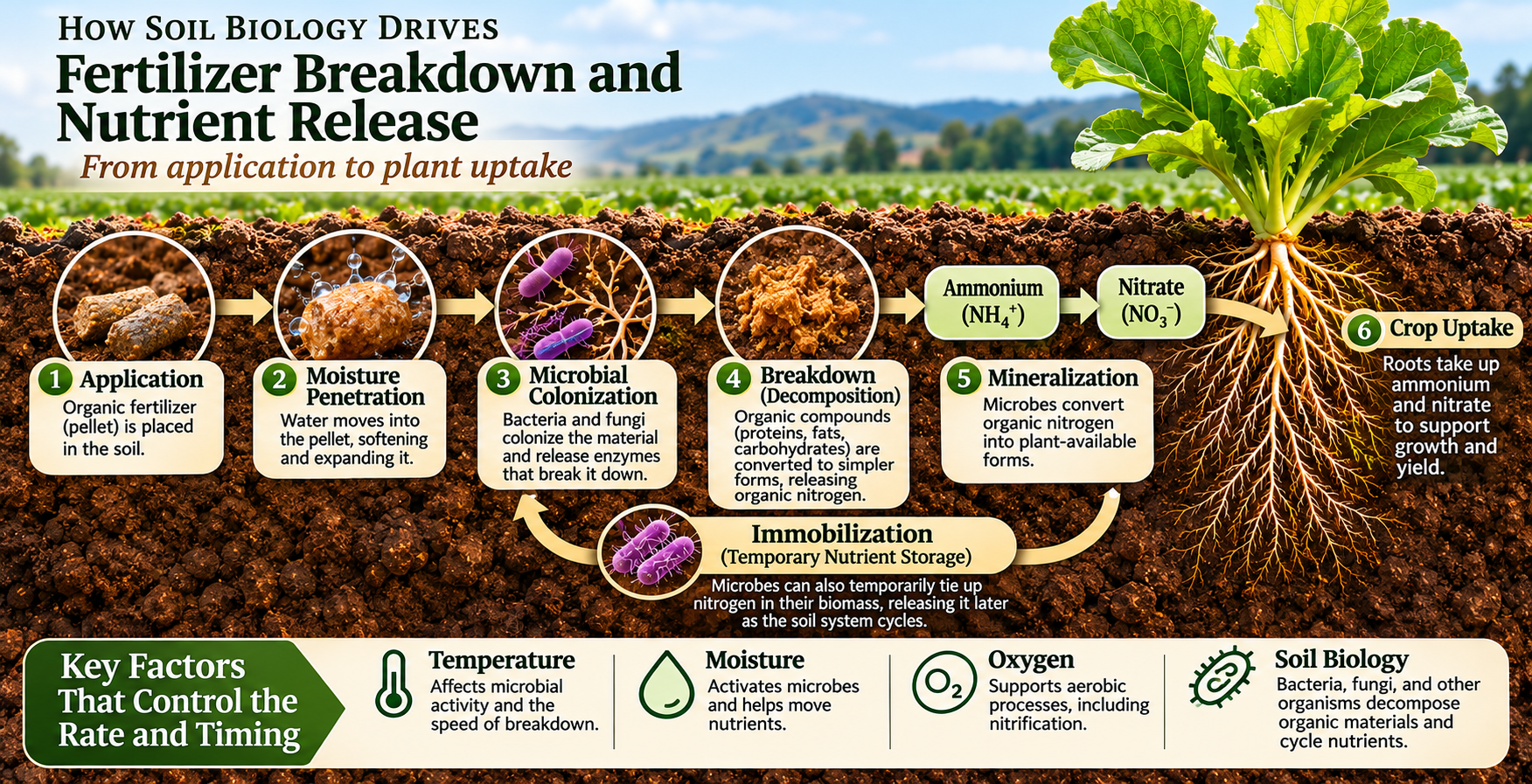
How Soil Biology Drives Fertilizer Breakdown and Nutrient Release
Organic fertilizer nutrients do not become plant-available automatically. Learn how soil biology, moisture, temperature, oxygen, fertilizer composition, and physical breakdown influence nutrient release and crop uptake.
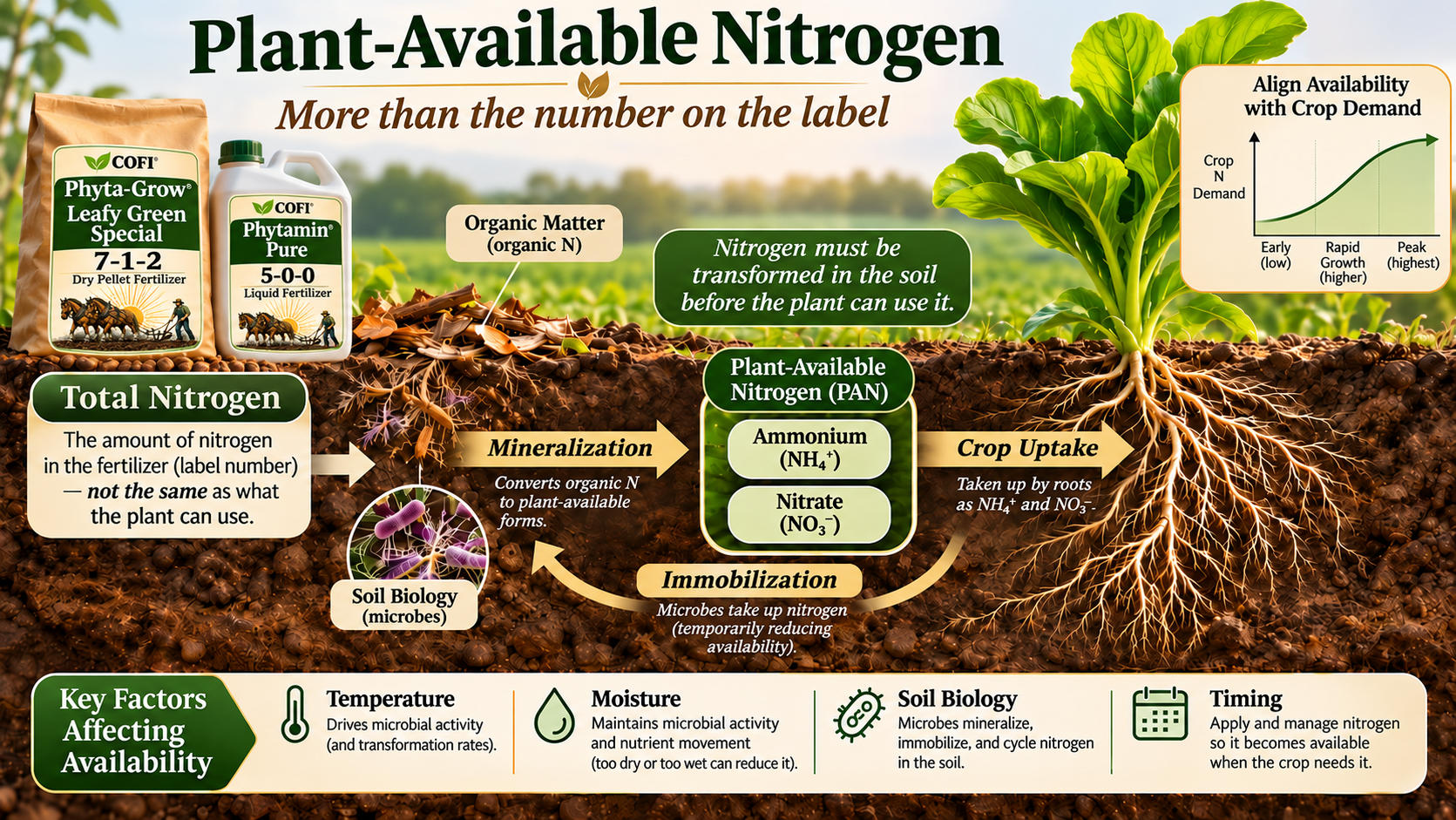
Why Plant-Available Nitrogen Matters More Than the Number on the Fertilizer Label
Total nitrogen on a fertilizer label does not tell you how much nitrogen will become available to the crop — or when. Learn how mineralization, immobilization, soil conditions, and crop demand affect plant-available nitrogen.
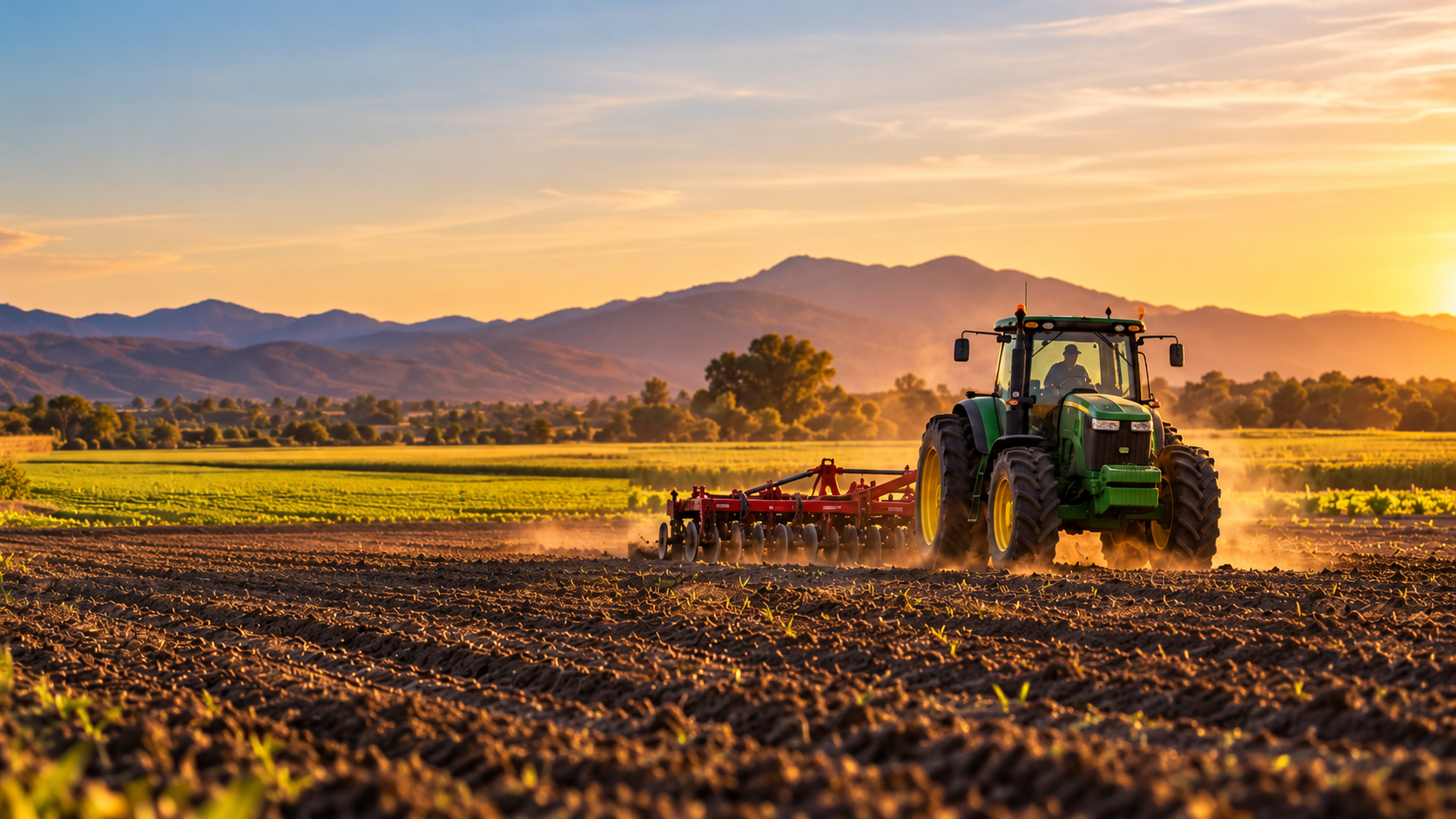
When Diesel Is Expensive: How to Reduce Field-Operation Costs Without Sacrificing the Crop
High diesel prices increase the cost of tillage, fertilizer application, cultivation, spraying, and nearly every trip across the field. Learn how to identify unnecessary passes, combine operations, improve tractor efficiency, and reduce total field-operation cost without compromising crop performance.
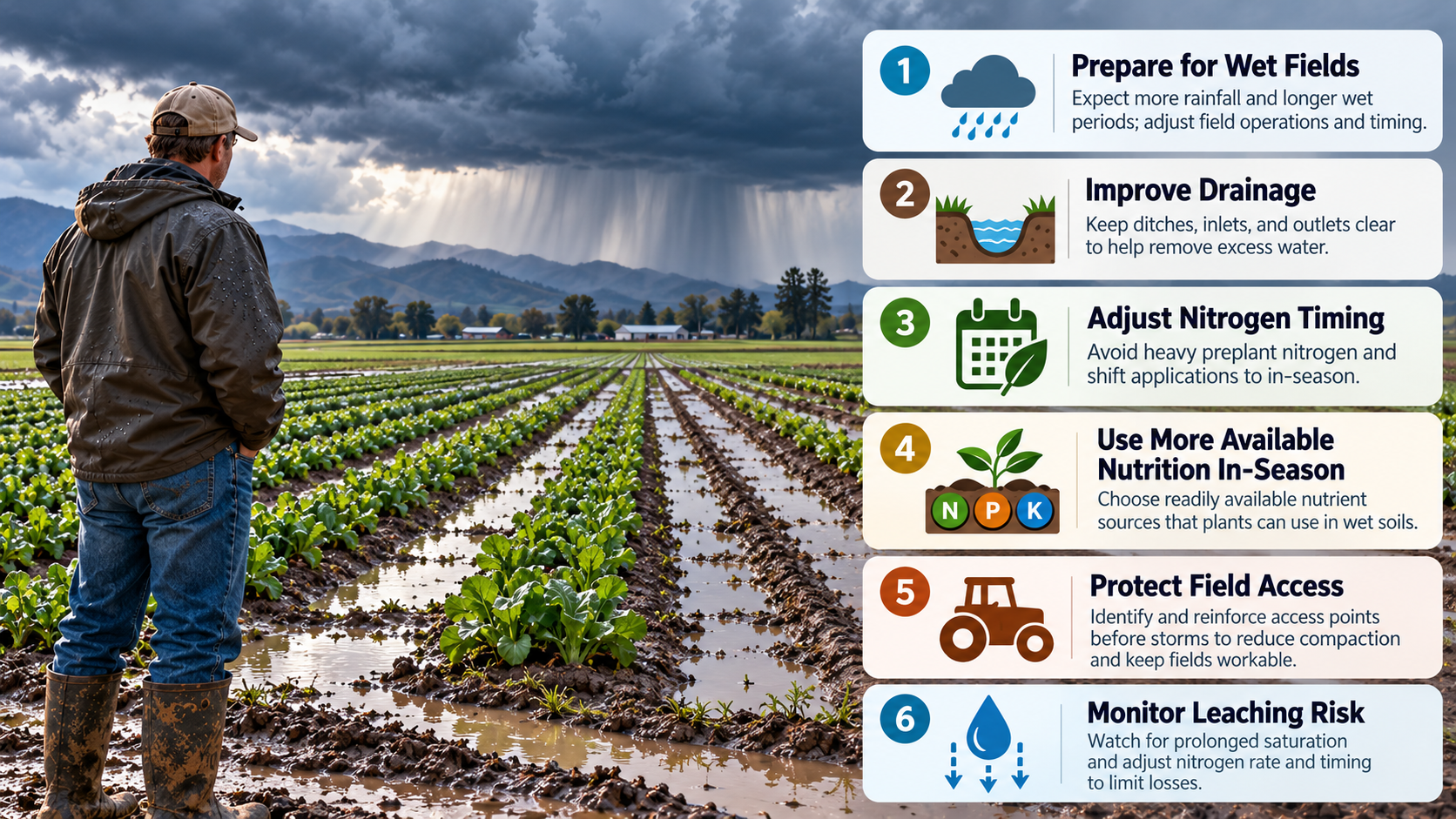
Preparing the Farm for a Wet El Niño Winter: What to Do Before the Rain Starts
A wet El Niño winter can increase the risk of saturated soils, nutrient losses, erosion, runoff, and limited field access. Learn practical steps growers can take before, during, and after heavy rain to protect fields and adjust fertility programs.
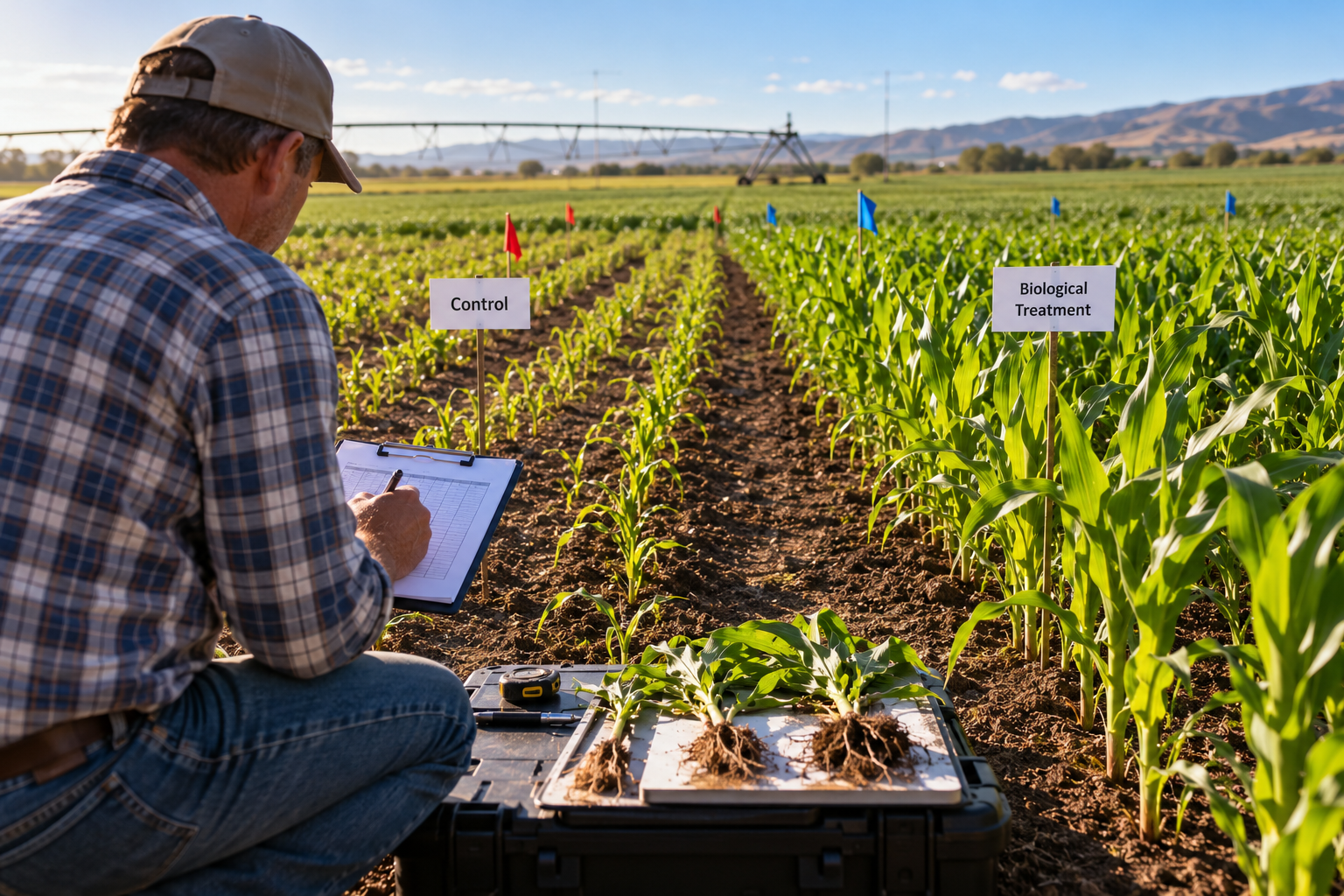
How to Evaluate Agricultural Biologicals in Field Trials
Agricultural biologicals can produce real benefits, but field results are often variable. Learn how to design practical trials with the right controls, replication, measurements, and economic analysis so you can determine whether a biological response is real, repeatable, and worth the cost.
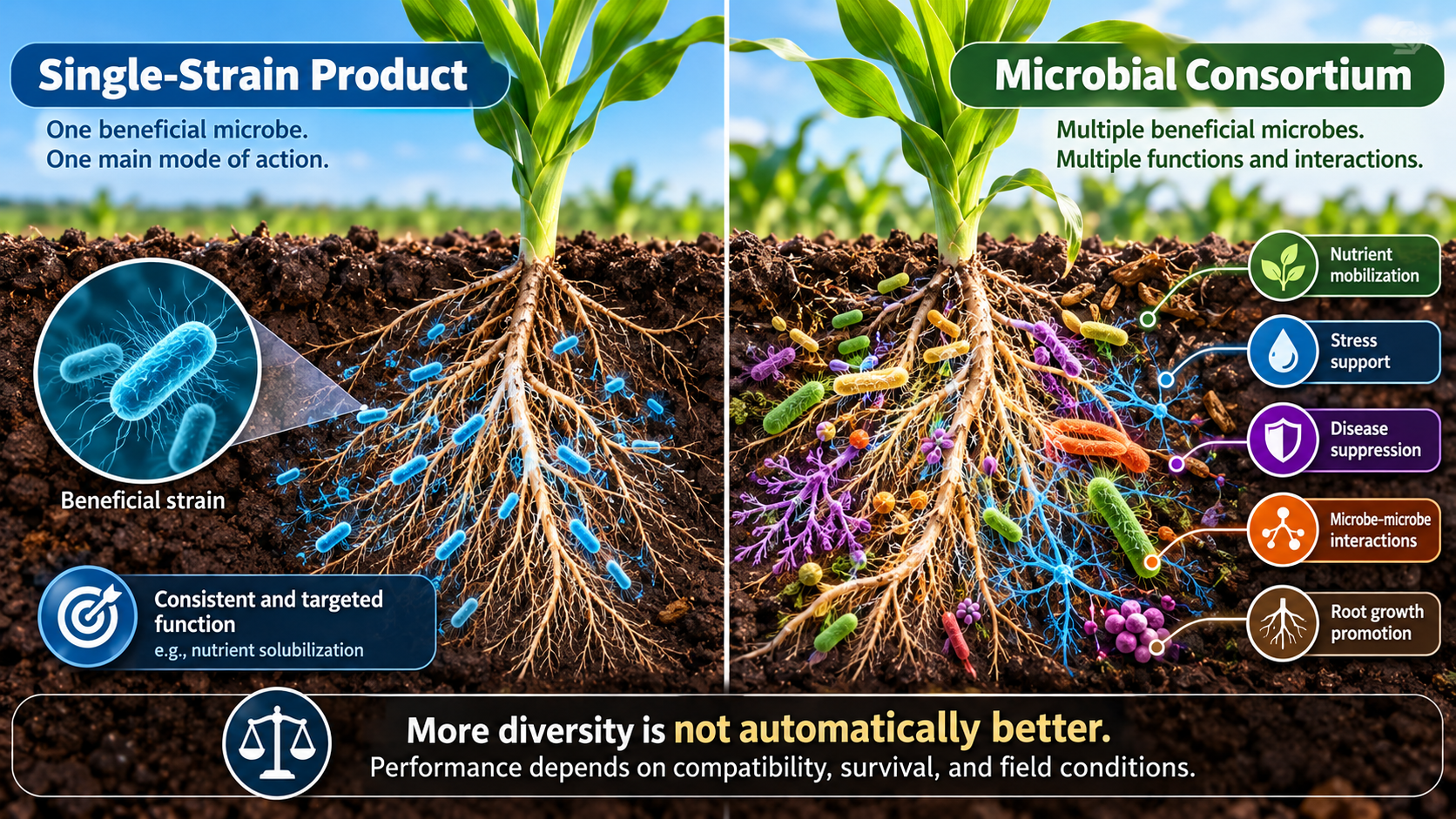
Microbial Consortia vs. Single-Strain Products: Is More Diversity Better?
Microbial consortia can combine complementary functions and sometimes outperform single-strain inoculants, but more microbial diversity does not automatically mean better results. Learn what research shows about compatibility, stability, synergy, and field performance.
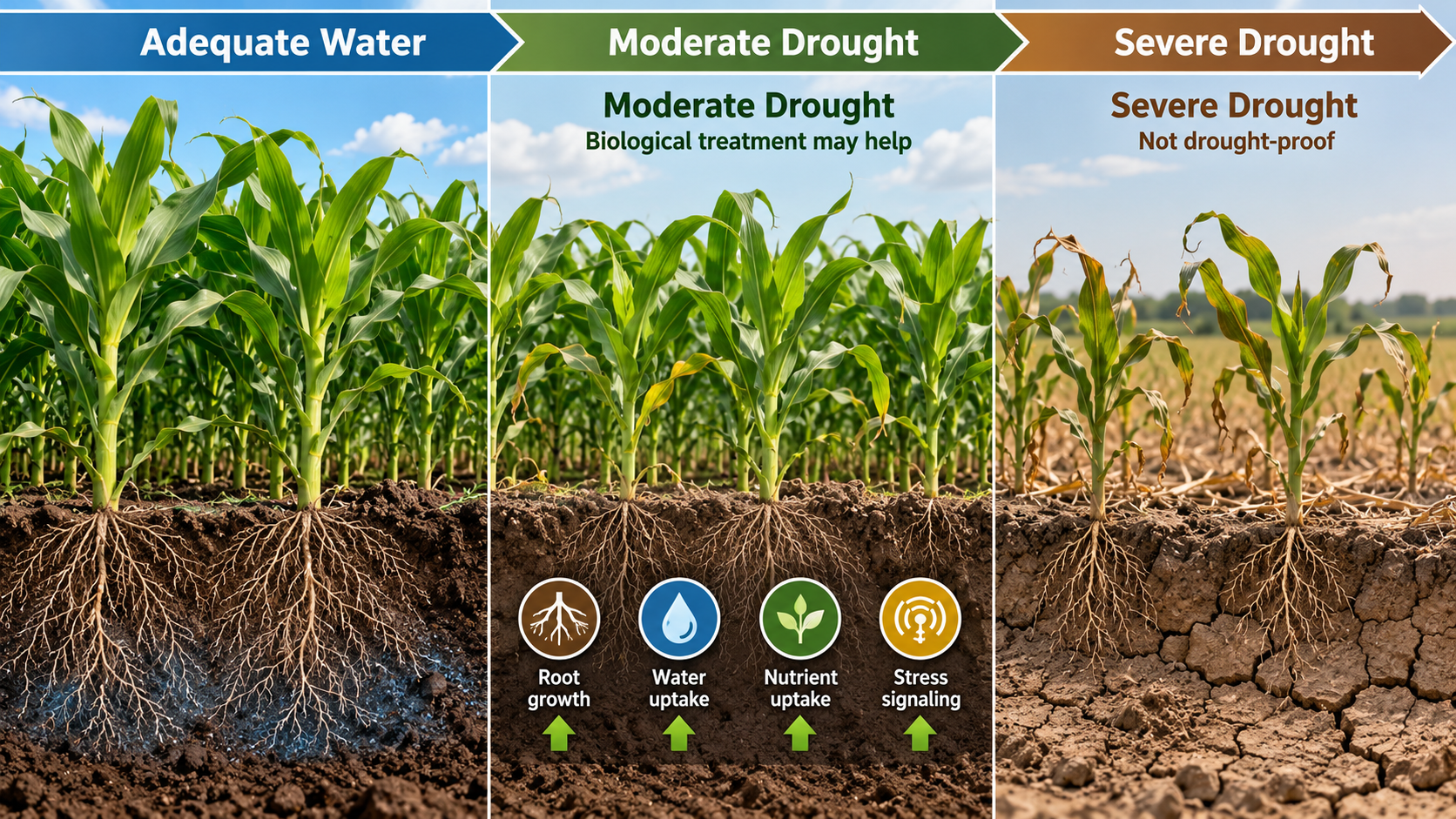
Biologicals and Drought Stress: Separating Mechanism from Marketing
Biologicals can influence root growth, water uptake, hormone signaling, nutrient acquisition, and other drought-response mechanisms, but they do not make crops drought-proof. Learn what the research shows, why field results vary, and what growers should measure before trusting drought-tolerance claims.
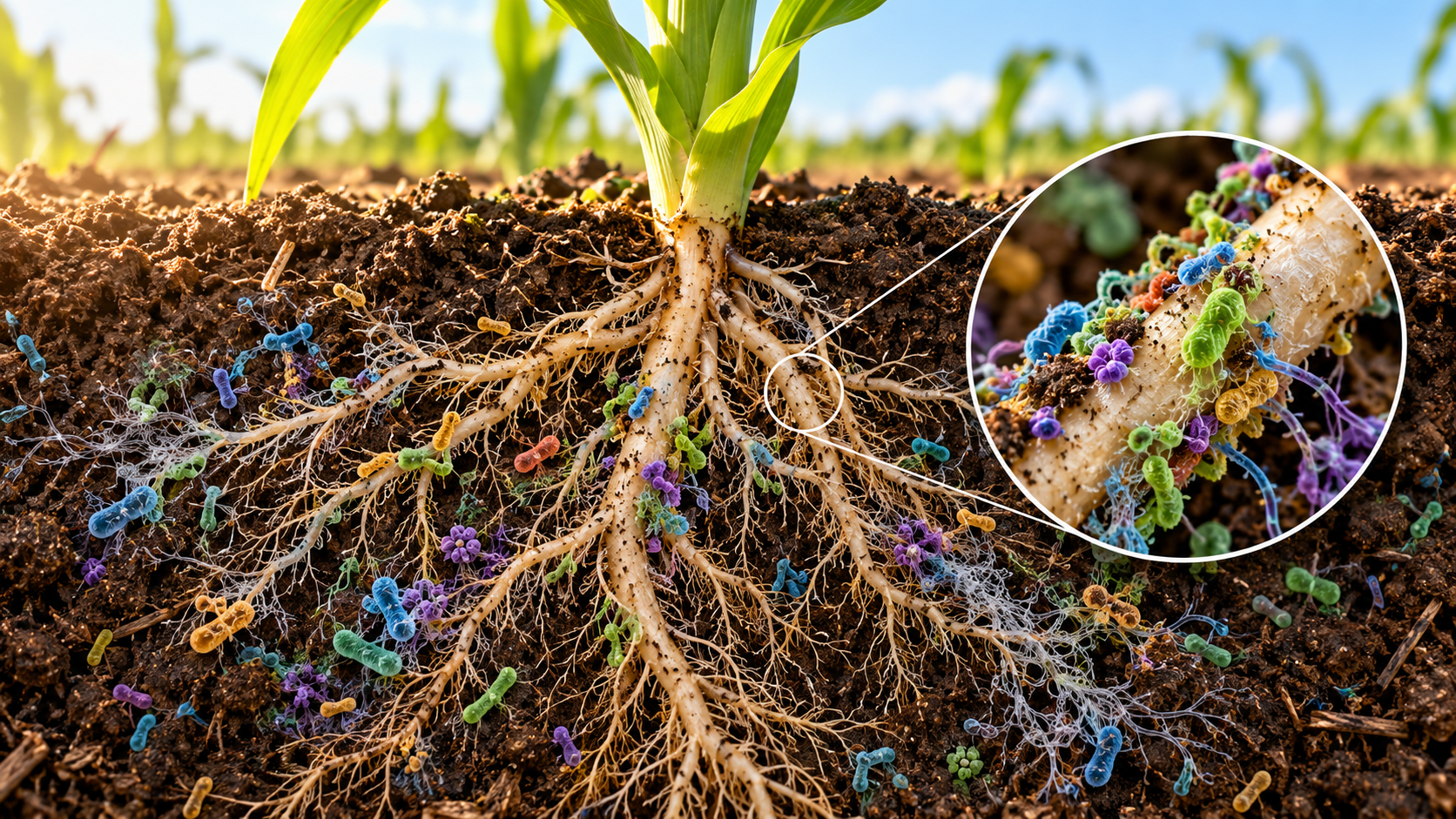
Microbial Inoculants and Root Growth: What the Research Actually Shows
Microbial inoculants can influence root length, branching, root hairs, and nutrient uptake, but larger roots do not automatically mean higher yield. Learn what the research shows, why responses vary, and how growers can evaluate whether root changes provide real agronomic value.
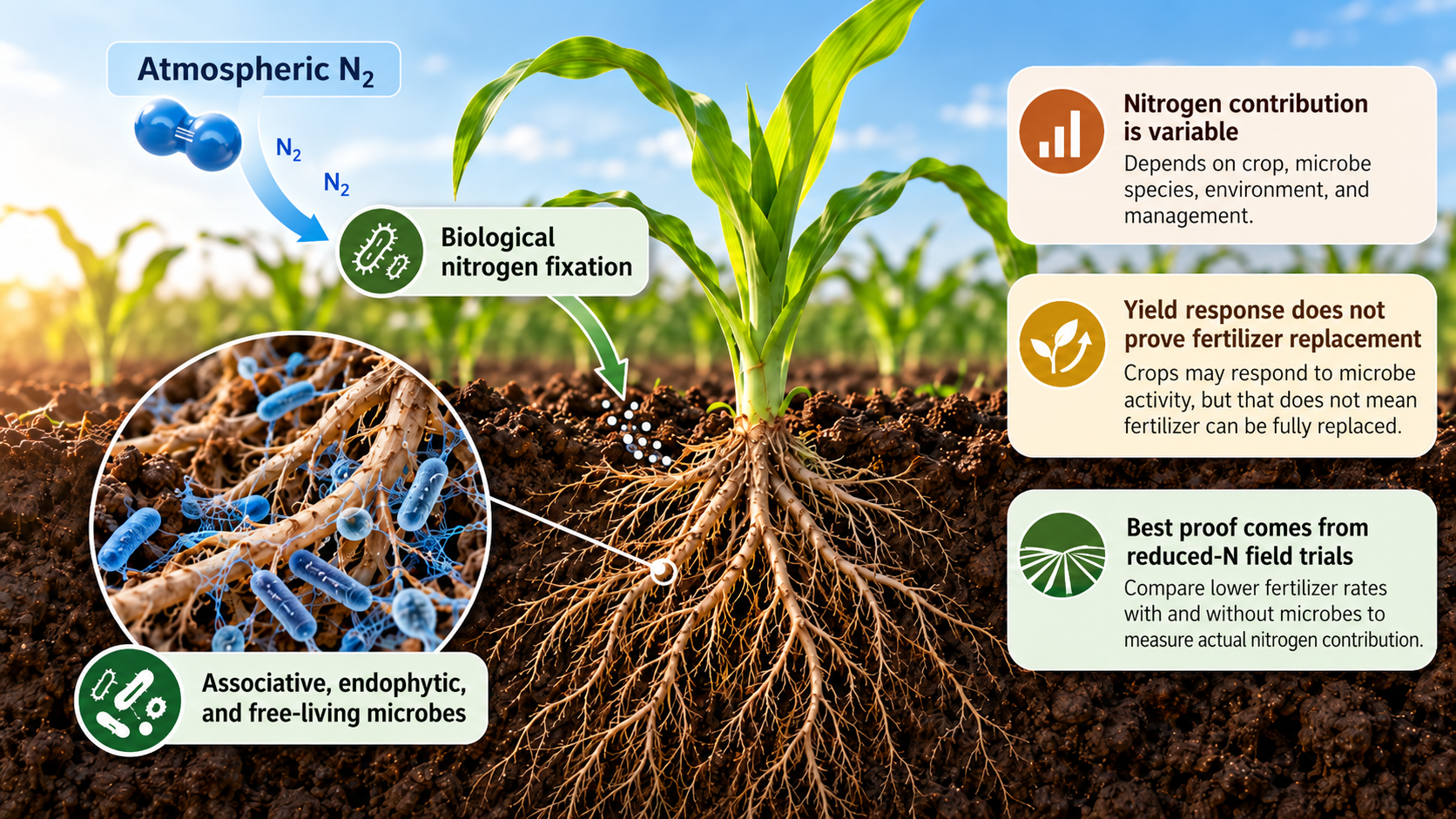
Nitrogen-Fixing Microbes: What They Can—and Cannot—Contribute to Crop Nitrogen
Nitrogen-fixing microbes can improve crop performance, but that does not automatically mean they replace fertilizer nitrogen. Learn how biological nitrogen fixation works, why non-legume results vary, and what growers should measure before reducing nitrogen inputs.
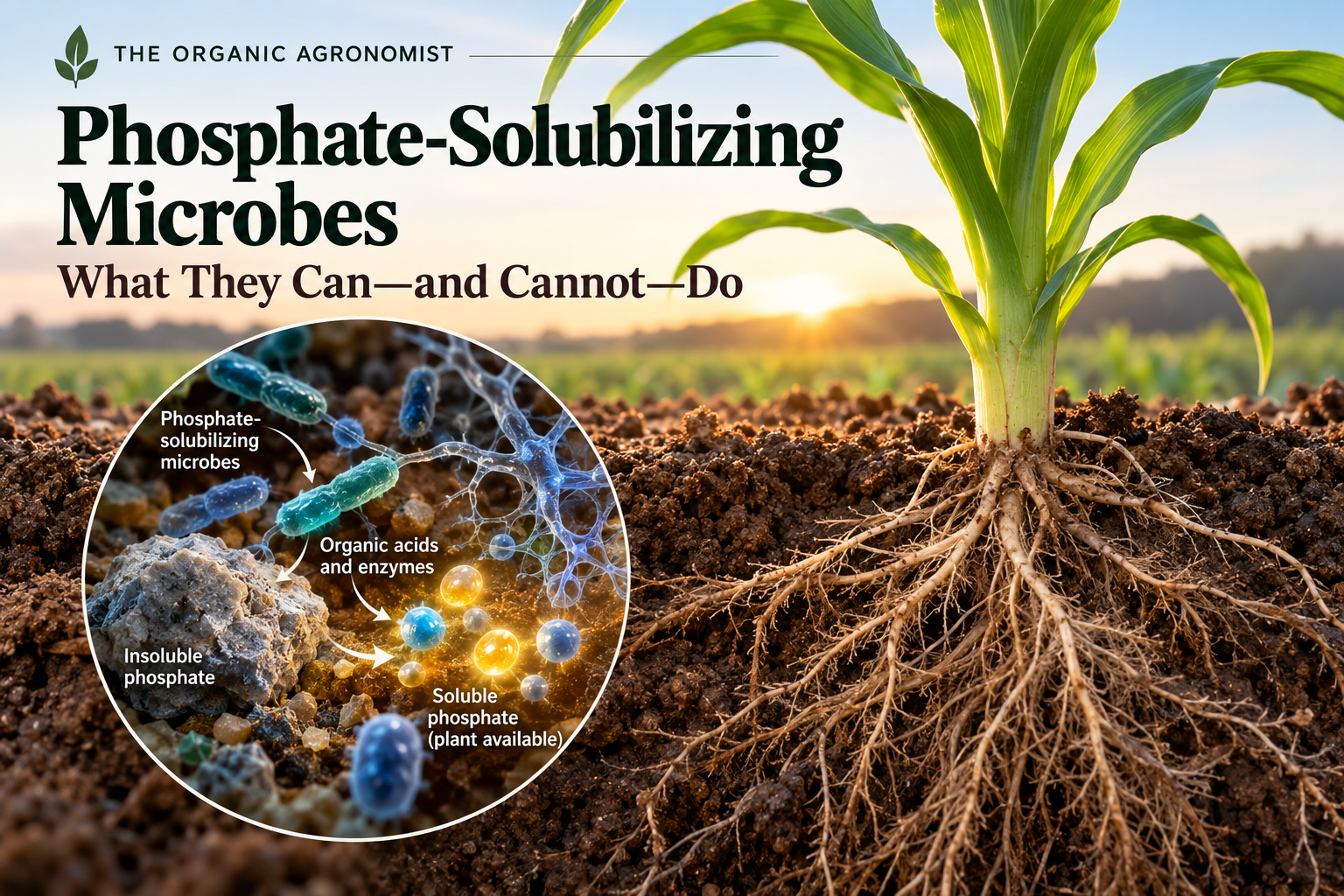
Phosphate-Solubilizing Microbes: What They Can—and Cannot—Do
Phosphate-solubilizing microbes can increase the availability of phosphorus already present in soil, but they do not create phosphorus or automatically replace fertilizer. Learn how they work, why field results vary, and what growers should measure before expecting a crop response.
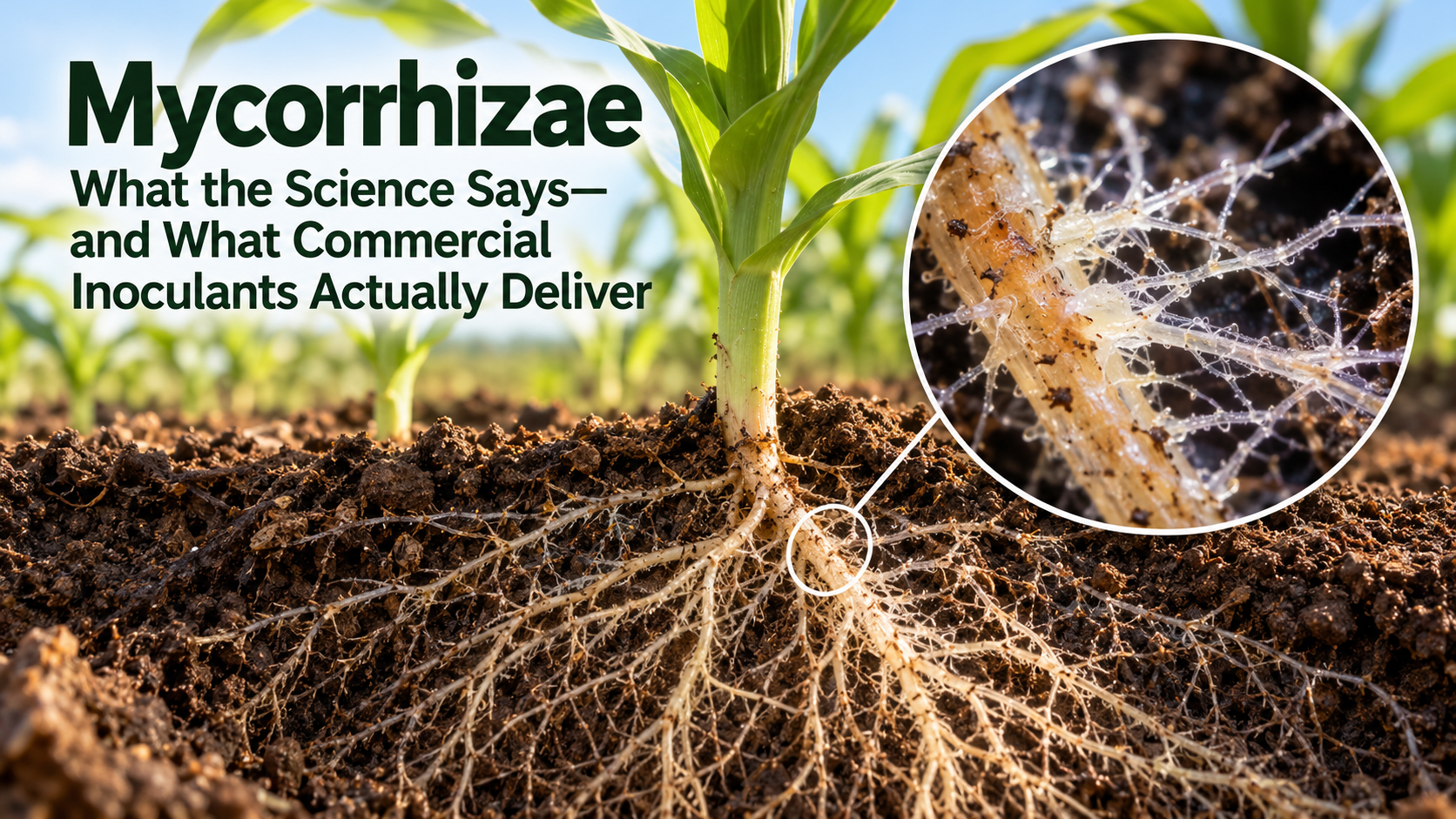
Mycorrhizae: What the Science Says—and What Commercial Inoculants Actually Deliver
Mycorrhizal fungi can improve nutrient and water acquisition, but commercial inoculants do not always deliver the same benefit. Learn what the science says about root colonization, phosphorus, product quality, and when inoculation is most likely to provide value.
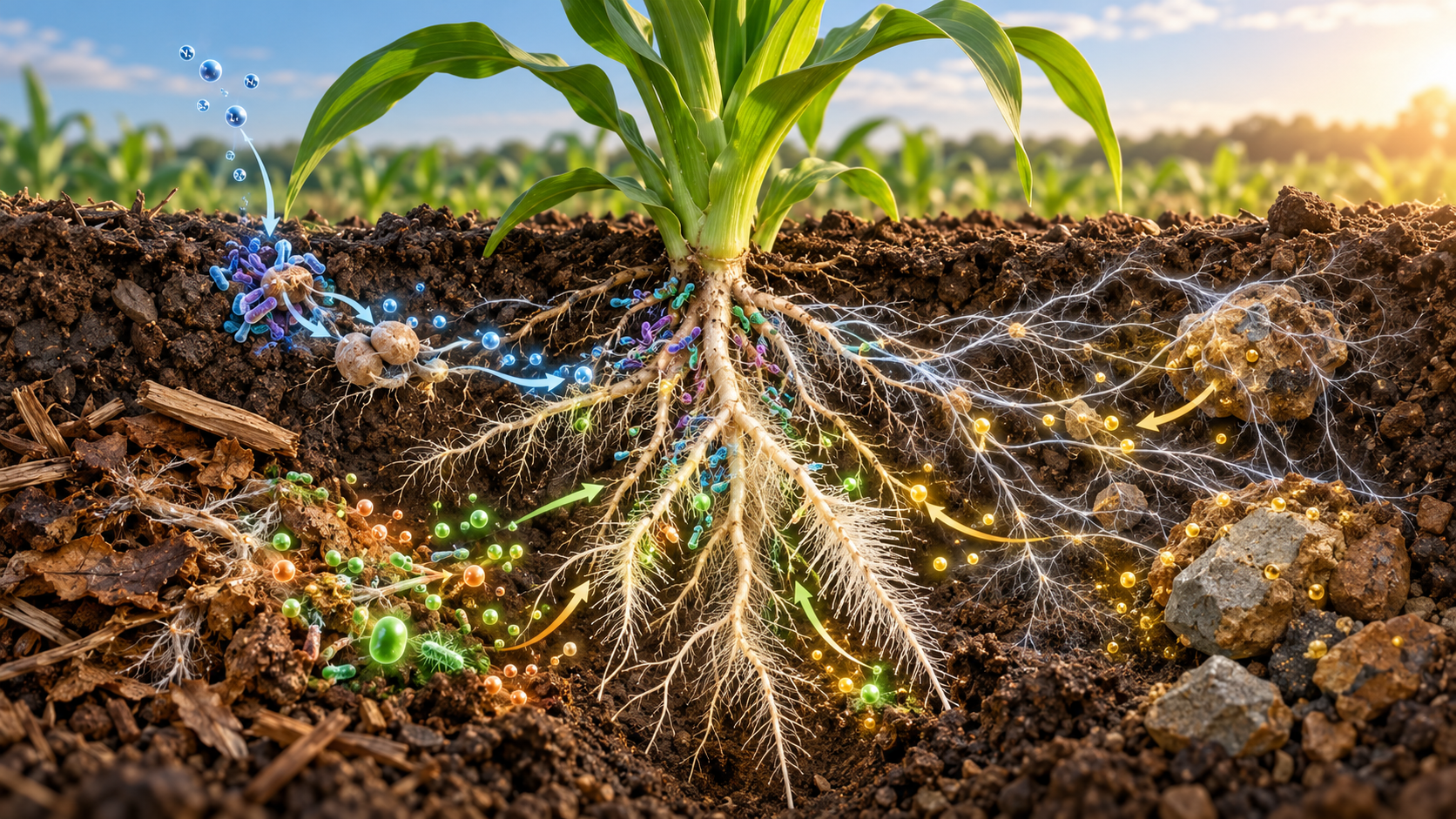
Can Microbial Inoculants Improve Nutrient Availability—and Reduce Fertilizer Needs?
Microbial inoculants can improve nutrient availability, root growth, and nutrient-use efficiency, but that does not automatically mean fertilizer can be reduced. This article explains when microbes can support crop nutrition, when fertilizer reductions may be justified, and how growers can test the claim in the field.
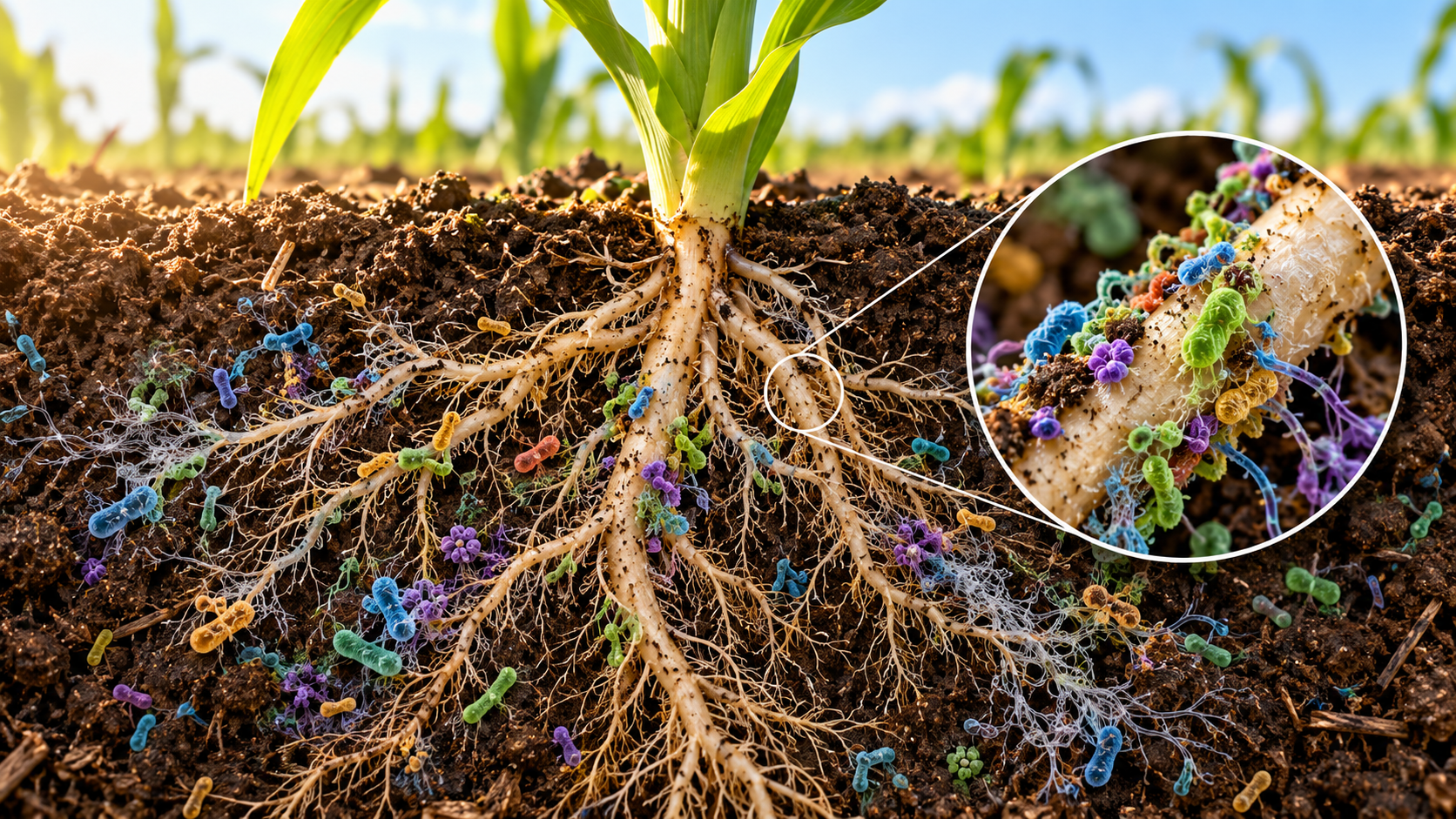
Why Microbial Inoculants Fail in the Field: Survival, Establishment, and the Rhizosphere
A microbial inoculant can contain a scientifically valid organism and still fail in the field. Learn why survival, application, root-zone placement, colonization, persistence, and native microbial competition all influence whether a biological product produces a measurable crop response.
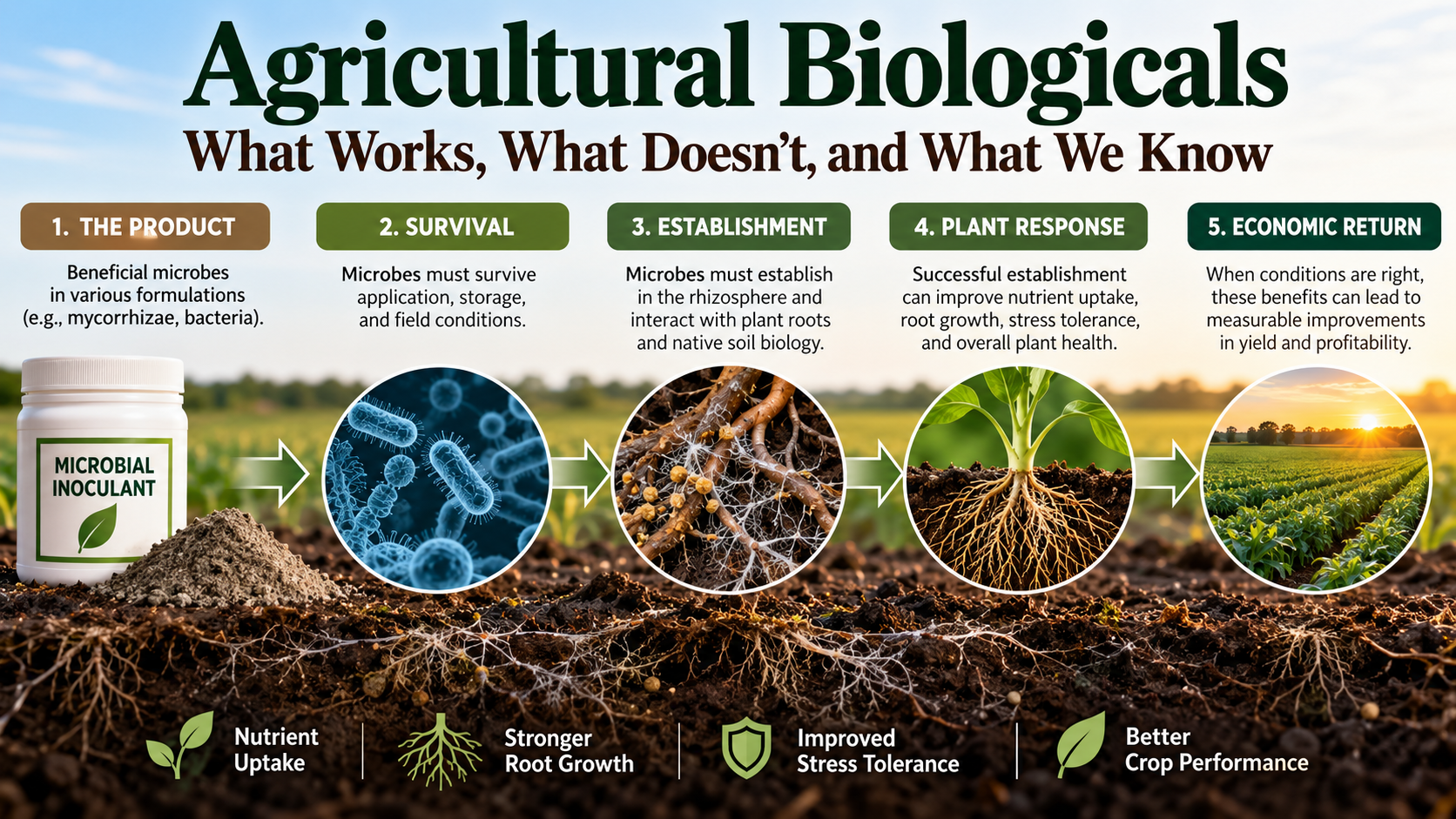
Agricultural Biologicals: What Works, What Doesn’t, and What We Know
Agricultural biologicals can improve nutrient uptake, root growth, stress tolerance, and crop performance—but field results are often inconsistent. Learn what the research shows, why microbial products vary, and how growers can evaluate whether a biological input is likely to provide a measurable return.
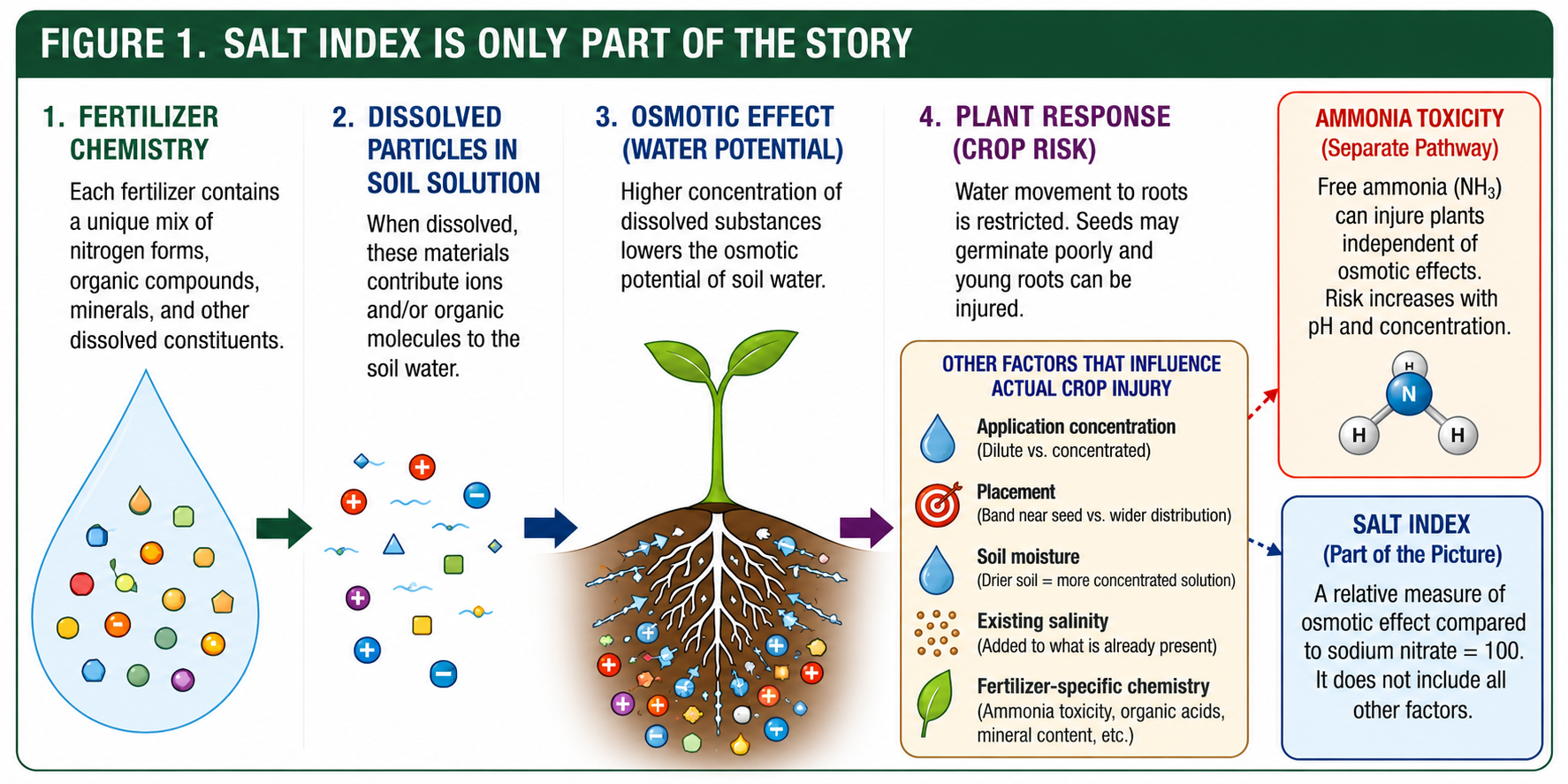
Understanding Salt Index in Organic Fertilizers: What the Number Really Means Copy title
Salt index is often misunderstood in organic agriculture. Learn why organic fertilizers are not automatically low in salts, why soluble fertilizers behave differently, and how fertilizer chemistry, application concentration, placement, and soil moisture influence crop safety.
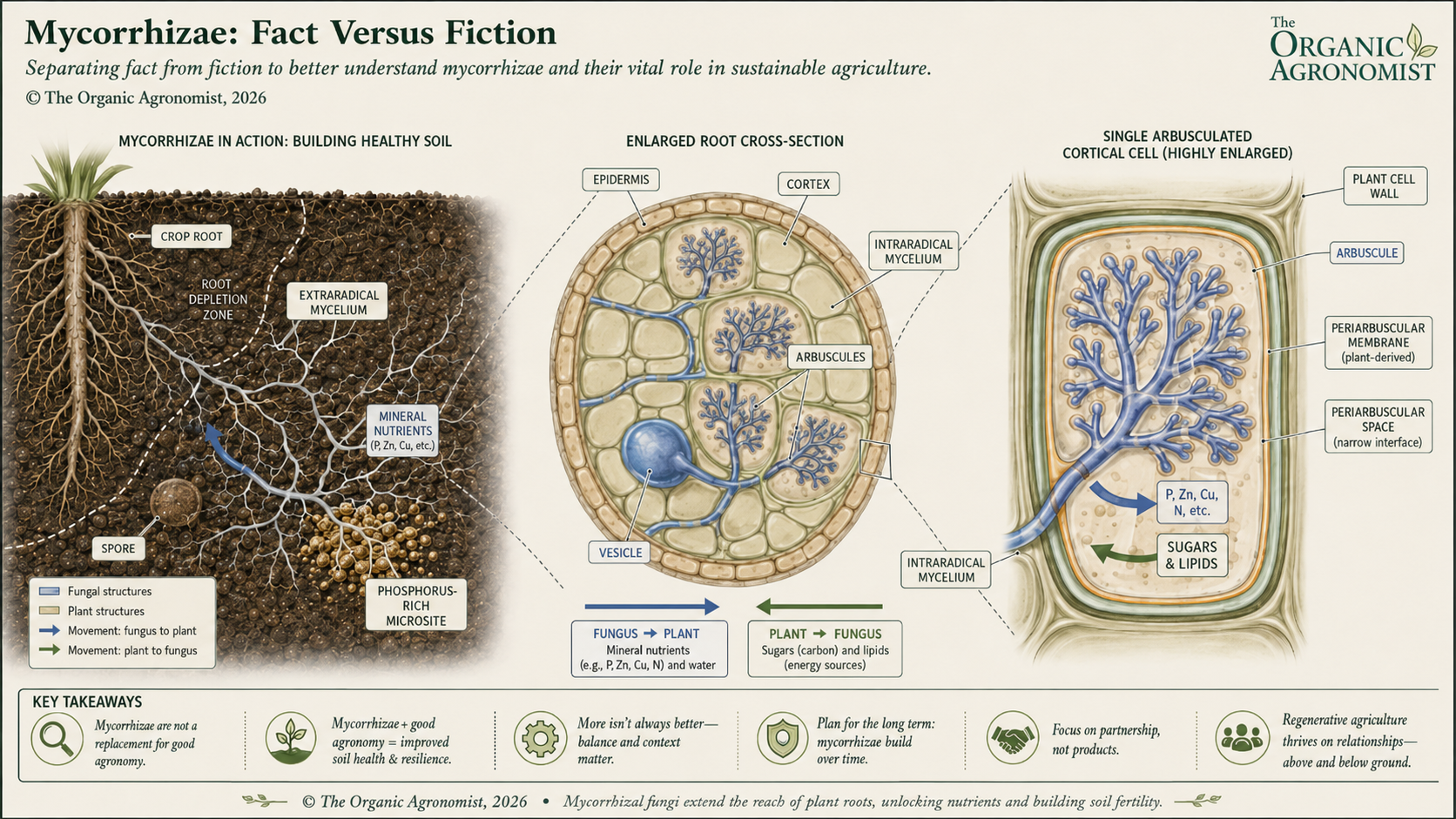
Mycorrhizae: Fact Versus Fiction
Mycorrhizal fungi can improve phosphorus acquisition, drought response, and crop performance—but not in every field. This evidence-based guide explains how mycorrhizae work, when inoculants may help, and when managing the native fungal community may be the better strategy.
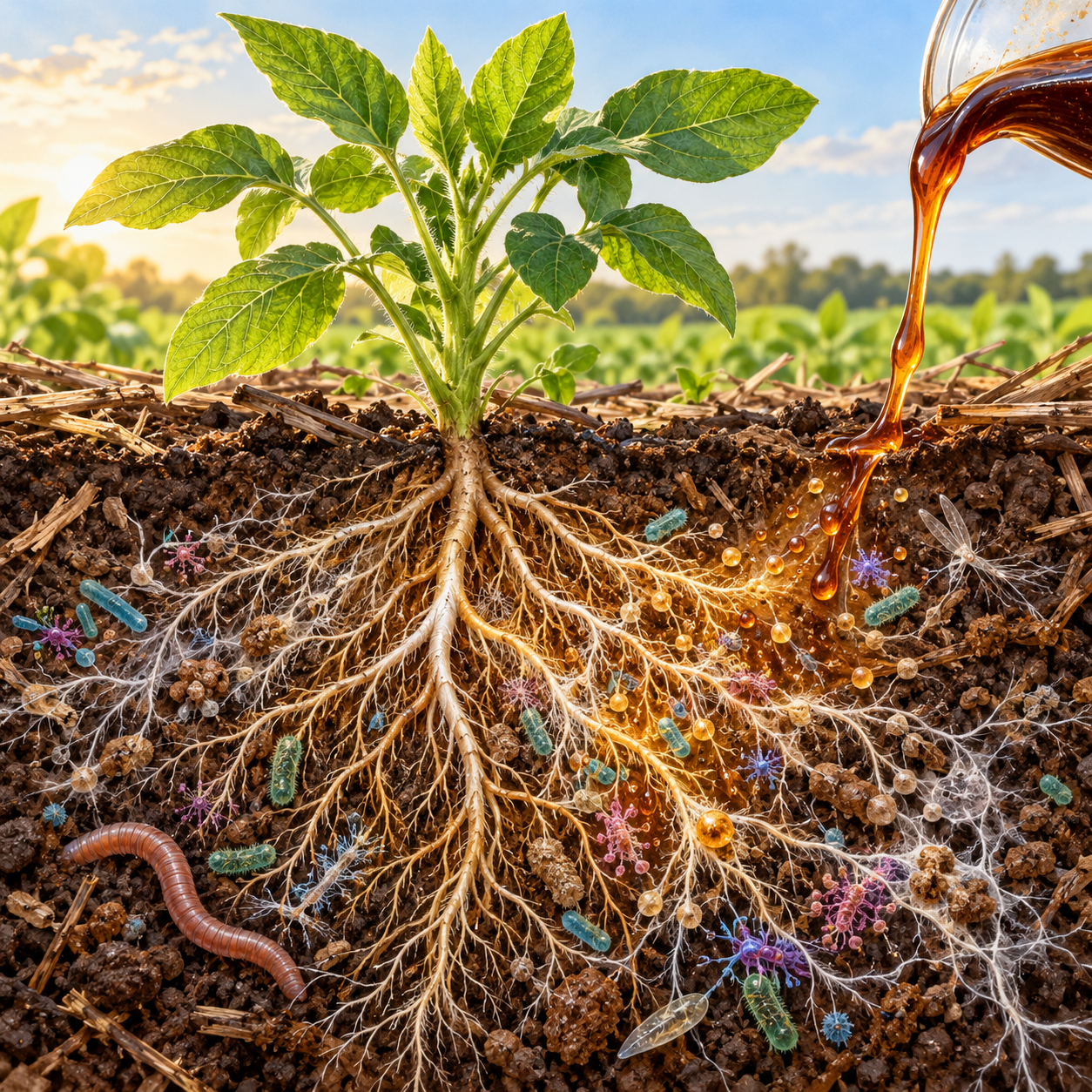
Molasses and Soil Biology: Understanding the Role of Readily Available Carbon
Molasses provides readily available carbon that supports soil microbial activity and influences nutrient cycling. Learn how carbon and nitrogen interact, why soil conditions matter, and how molasses fits into an effective organic fertility program.
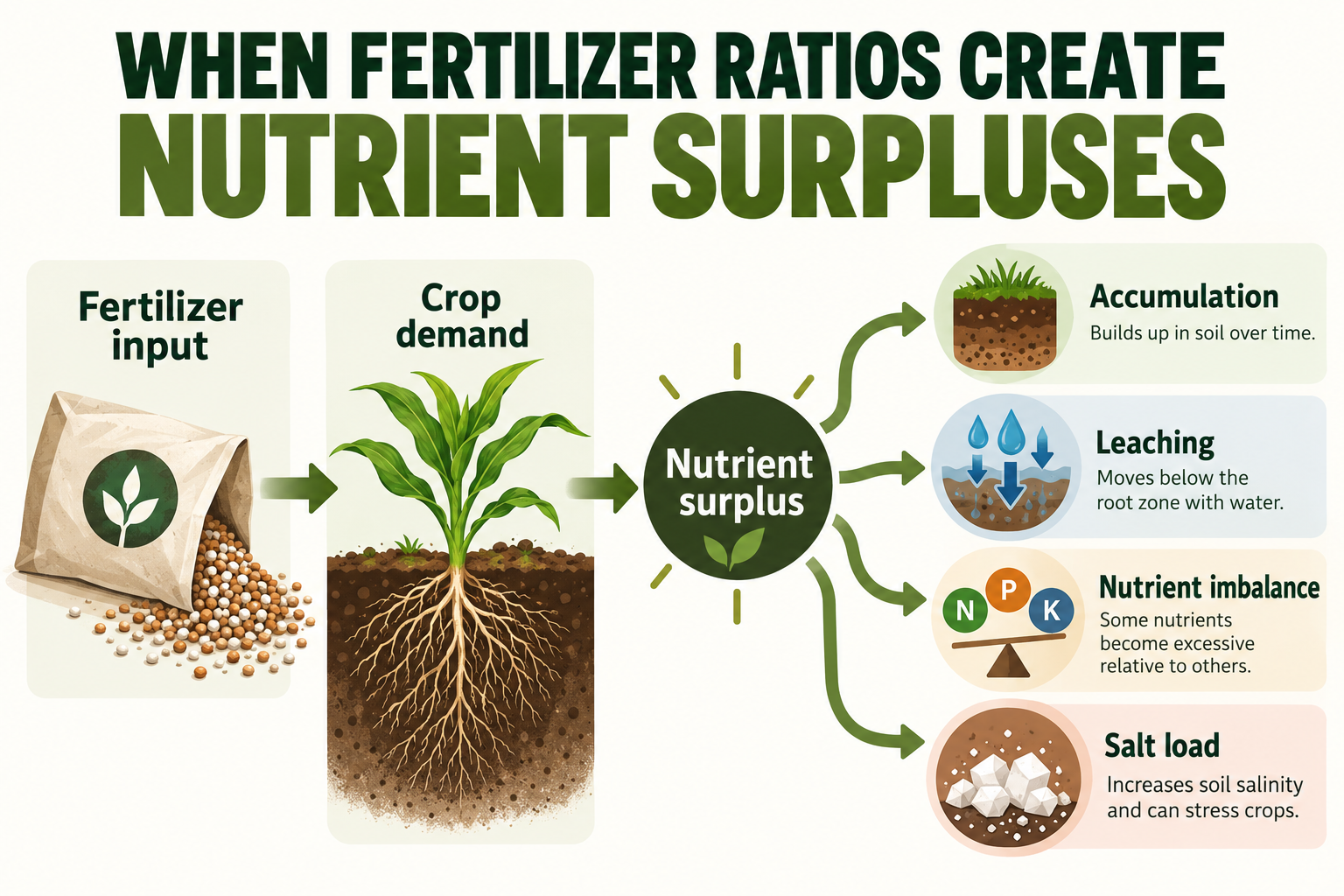
When Fertilizer Ratios Create Nutrient Surpluses
Fertilizer ratios can create nutrient surpluses when one nutrient is applied to meet crop demand while others are supplied in excess. Learn how surplus nitrogen, phosphorus, and potassium behave in soil—and why nutrient balance matters.
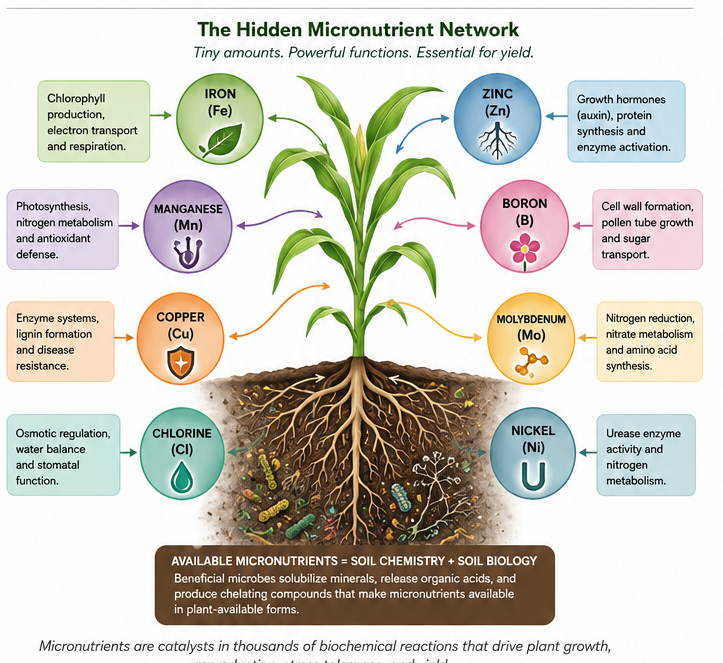
Micronutrients: The Quiet Yield Limiters
Micronutrients can limit crop performance long before visible deficiency symptoms appear. Learn how soil conditions, root function, tissue testing, and targeted correction help identify and manage these quiet yield limiters.
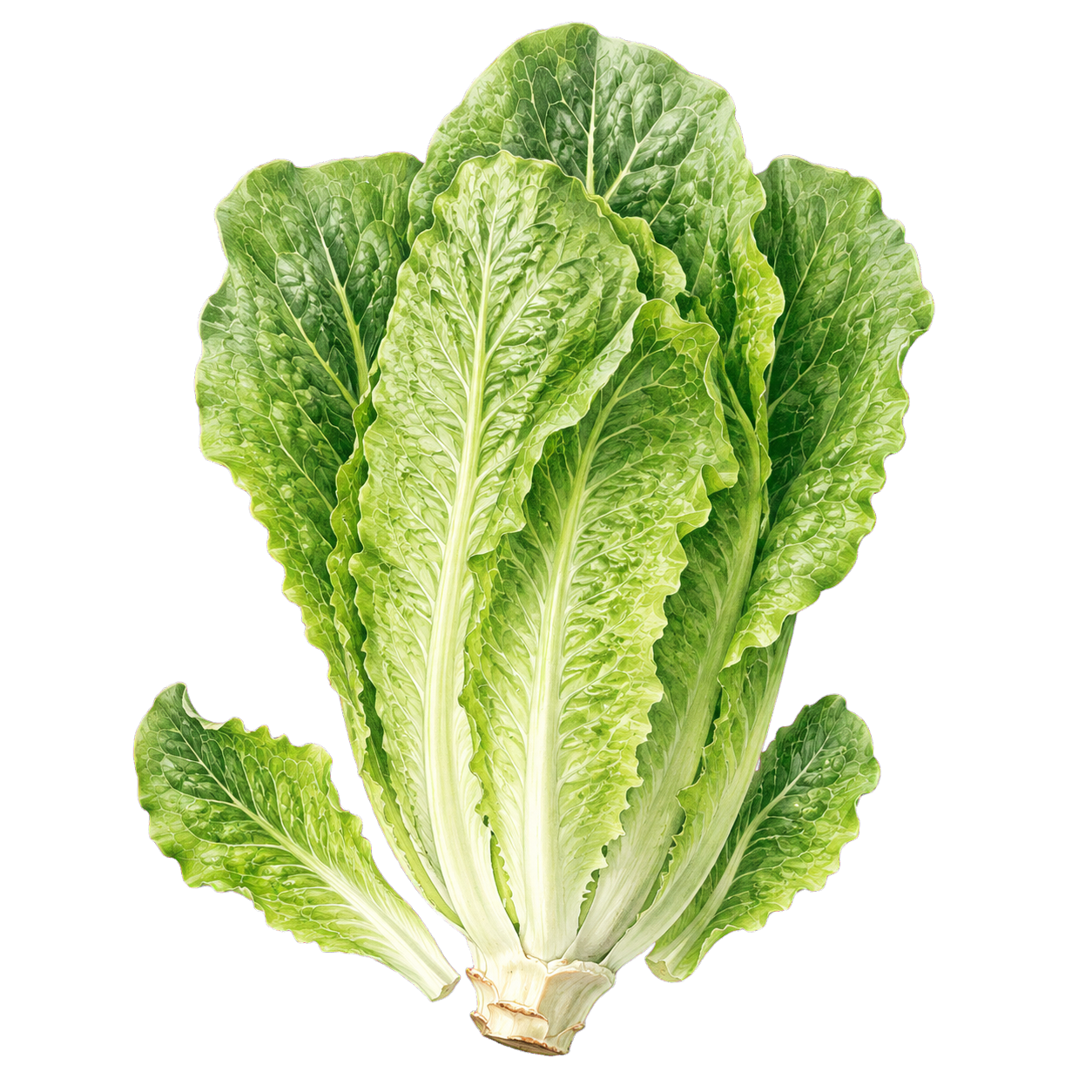
Growing Organic Lettuce: Better Nitrogen Management, Better Yields, Less Waste
Discover why nitrogen availability during the final 30 days before harvest is critical for organic lettuce yield and quality. Learn how soil testing, better fertilizer timing, and supplemental liquid nitrogen can improve nutrient efficiency while reducing unnecessary applications.