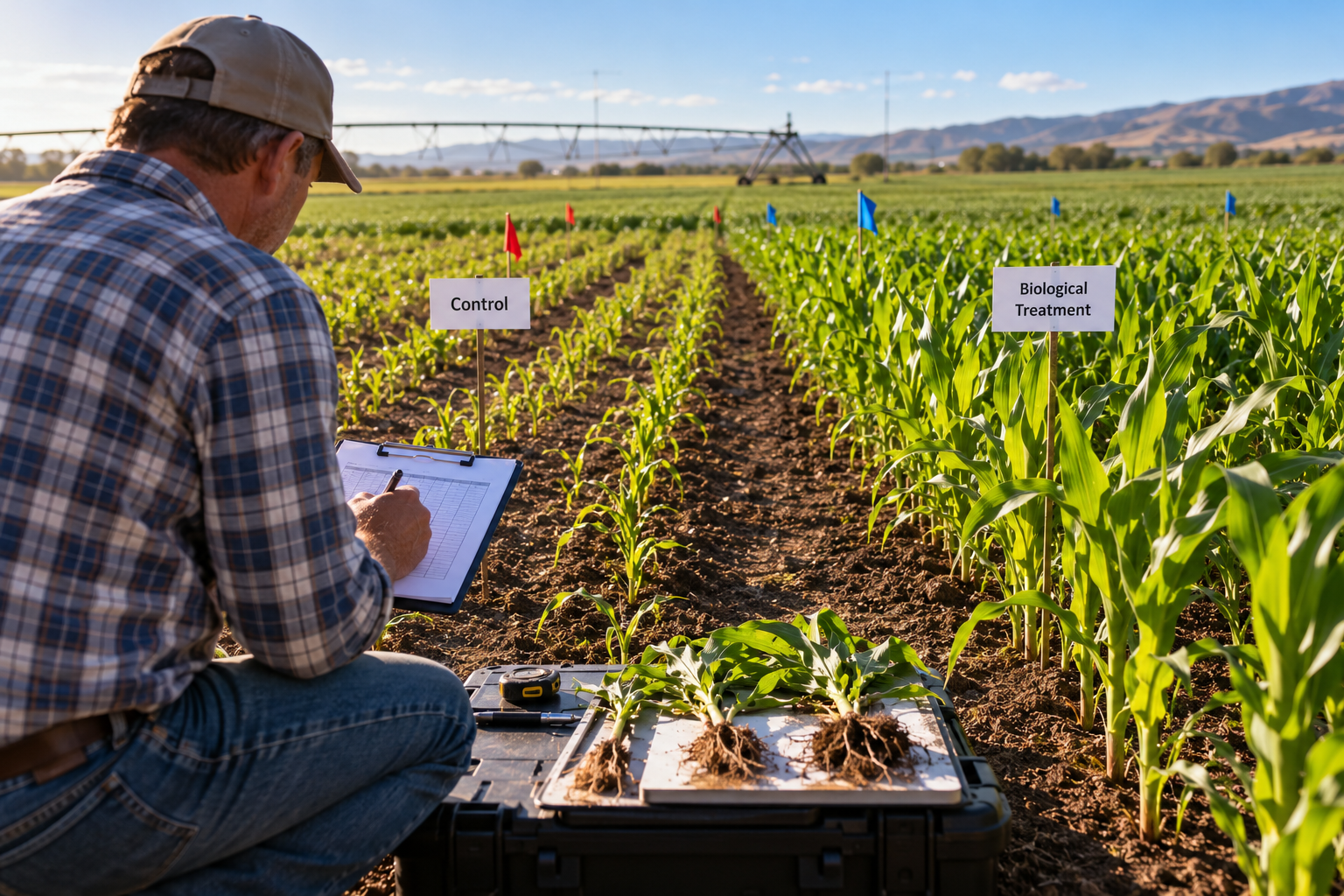
How to Evaluate Agricultural Biologicals in Field Trials
Agricultural biologicals can produce real benefits, but field results are often variable. Learn how to design practical trials with the right controls, replication, measurements, and economic analysis so you can determine whether a biological response is real, repeatable, and worth the cost.
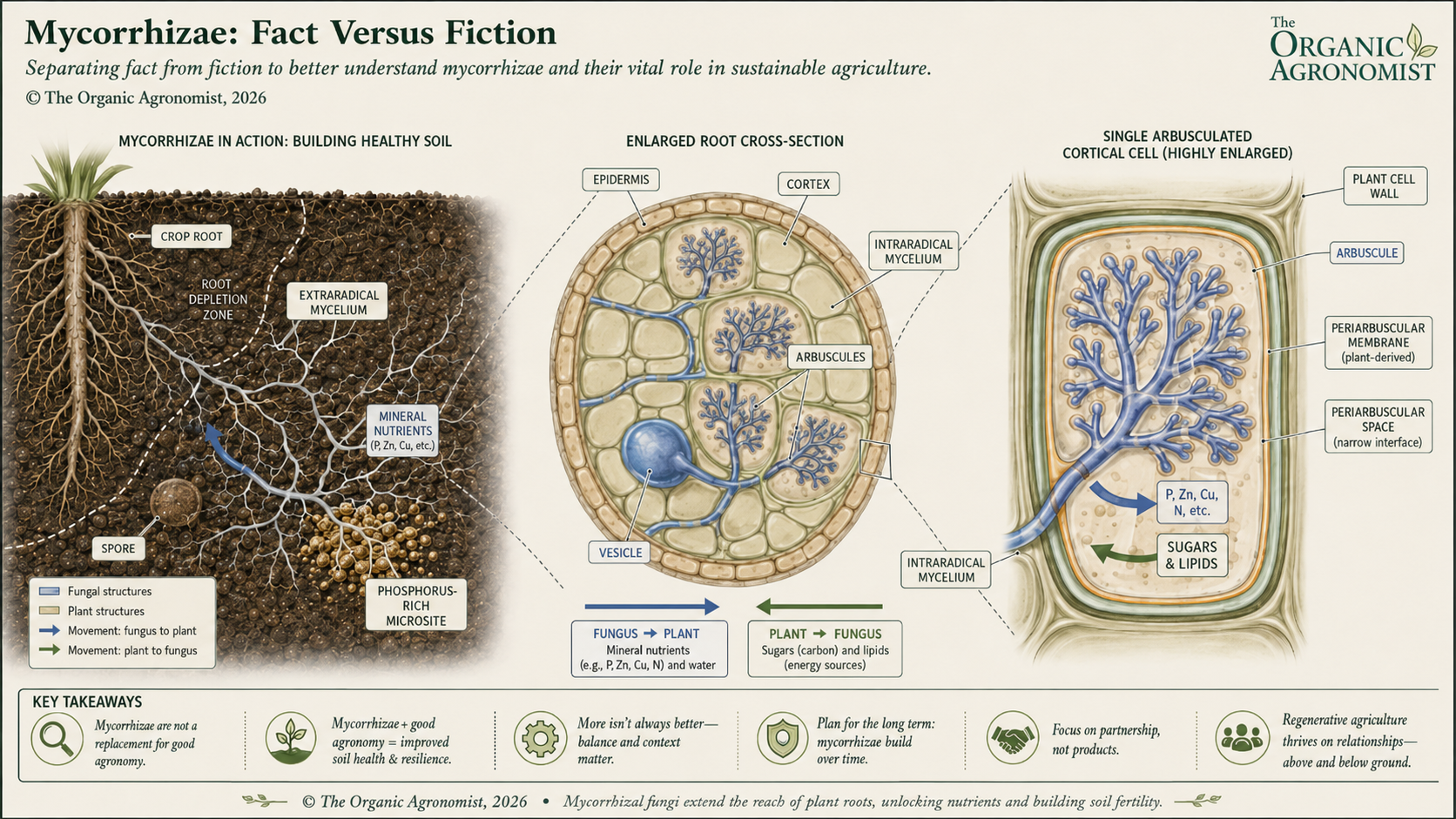
Mycorrhizae: Fact Versus Fiction
Mycorrhizal fungi can improve phosphorus acquisition, drought response, and crop performance—but not in every field. This evidence-based guide explains how mycorrhizae work, when inoculants may help, and when managing the native fungal community may be the better strategy.
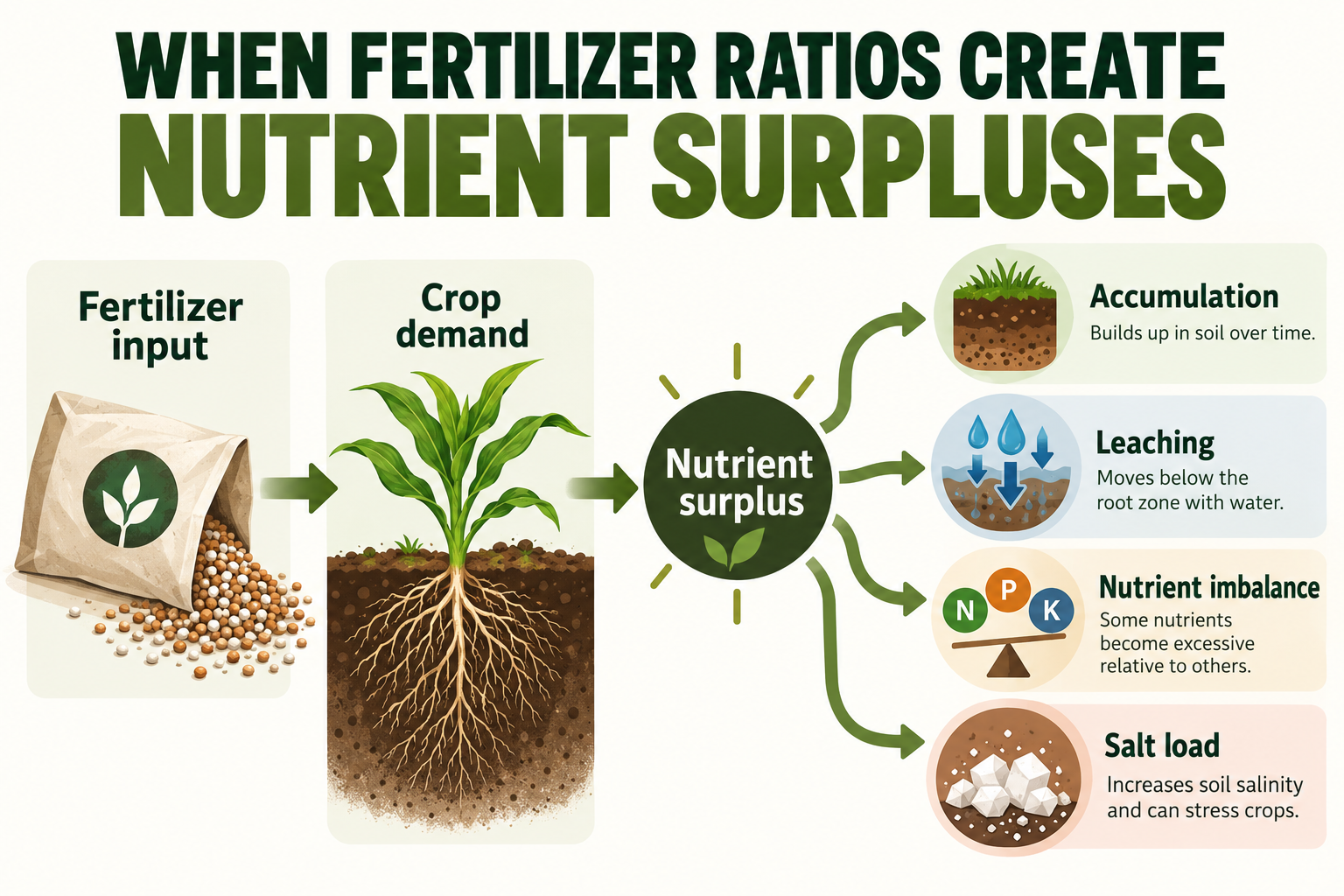
When Fertilizer Ratios Create Nutrient Surpluses
Fertilizer ratios can create nutrient surpluses when one nutrient is applied to meet crop demand while others are supplied in excess. Learn how surplus nitrogen, phosphorus, and potassium behave in soil—and why nutrient balance matters.
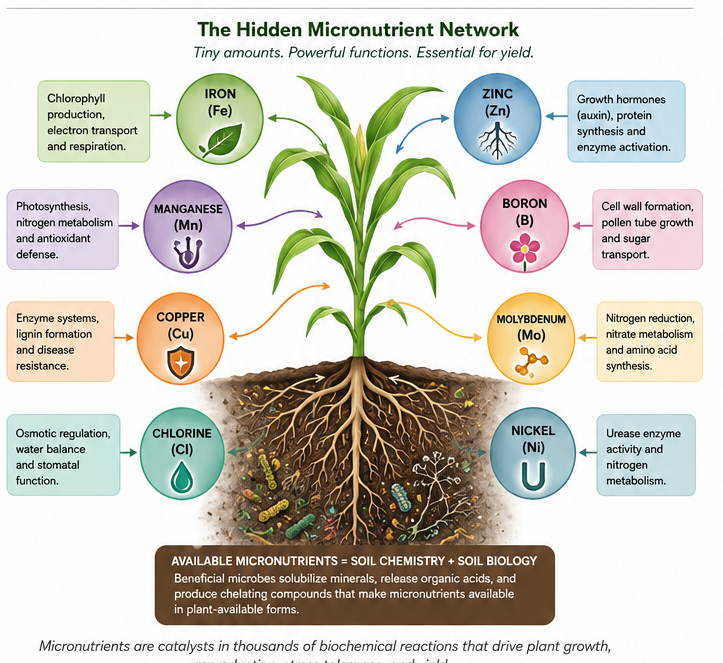
Micronutrients: The Quiet Yield Limiters
Micronutrients can limit crop performance long before visible deficiency symptoms appear. Learn how soil conditions, root function, tissue testing, and targeted correction help identify and manage these quiet yield limiters.

Organic Cucurbits: Matching Nitrogen to Bloom, Fruit Set, and Harvest
A practical guide to organic cucurbit nutrition: match nitrogen availability to vine growth, bloom, fruit set, and harvest to support balanced growth and productive crops.