
Phosphate-Solubilizing Microbes: What They Can—and Cannot—Do
Phosphate-solubilizing microbes can increase the availability of phosphorus already present in soil, but they do not create phosphorus or automatically replace fertilizer. Learn how they work, why field results vary, and what growers should measure before expecting a crop response.

Can Microbial Inoculants Improve Nutrient Availability—and Reduce Fertilizer Needs?
Microbial inoculants can improve nutrient availability, root growth, and nutrient-use efficiency, but that does not automatically mean fertilizer can be reduced. This article explains when microbes can support crop nutrition, when fertilizer reductions may be justified, and how growers can test the claim in the field.
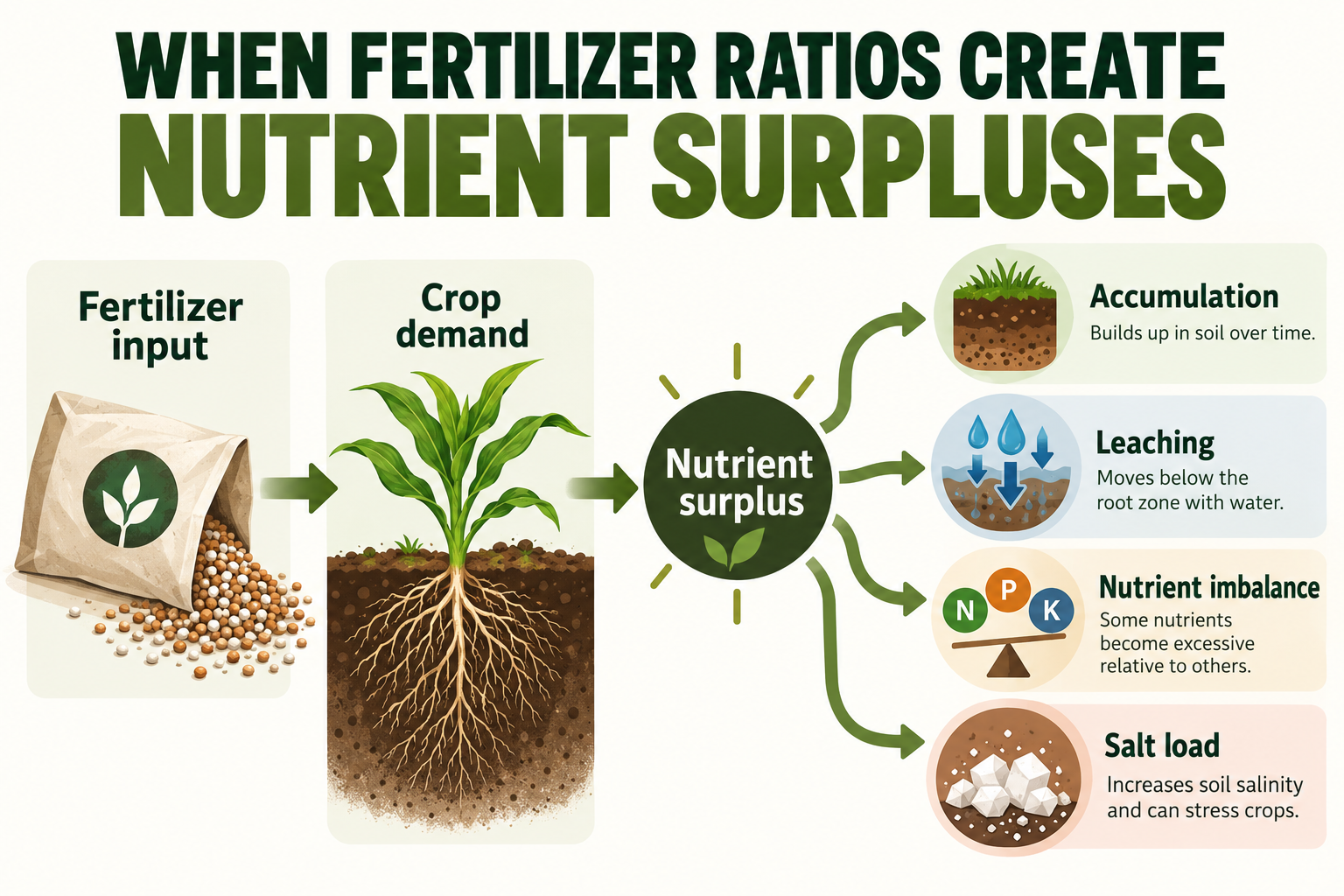
When Fertilizer Ratios Create Nutrient Surpluses
Fertilizer ratios can create nutrient surpluses when one nutrient is applied to meet crop demand while others are supplied in excess. Learn how surplus nitrogen, phosphorus, and potassium behave in soil—and why nutrient balance matters.