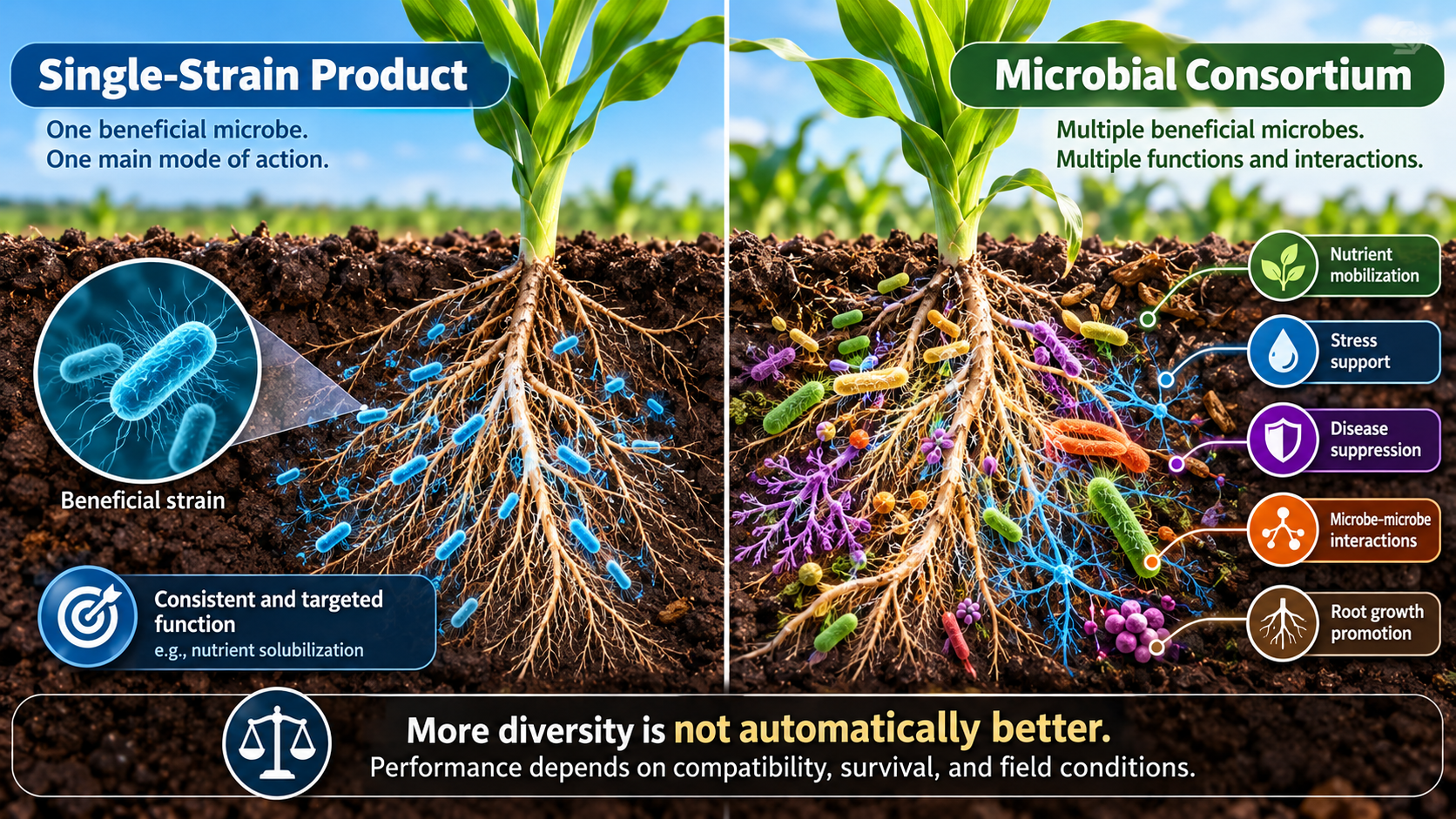
Microbial Consortia vs. Single-Strain Products: Is More Diversity Better?
Microbial consortia can combine complementary functions and sometimes outperform single-strain inoculants, but more microbial diversity does not automatically mean better results. Learn what research shows about compatibility, stability, synergy, and field performance.
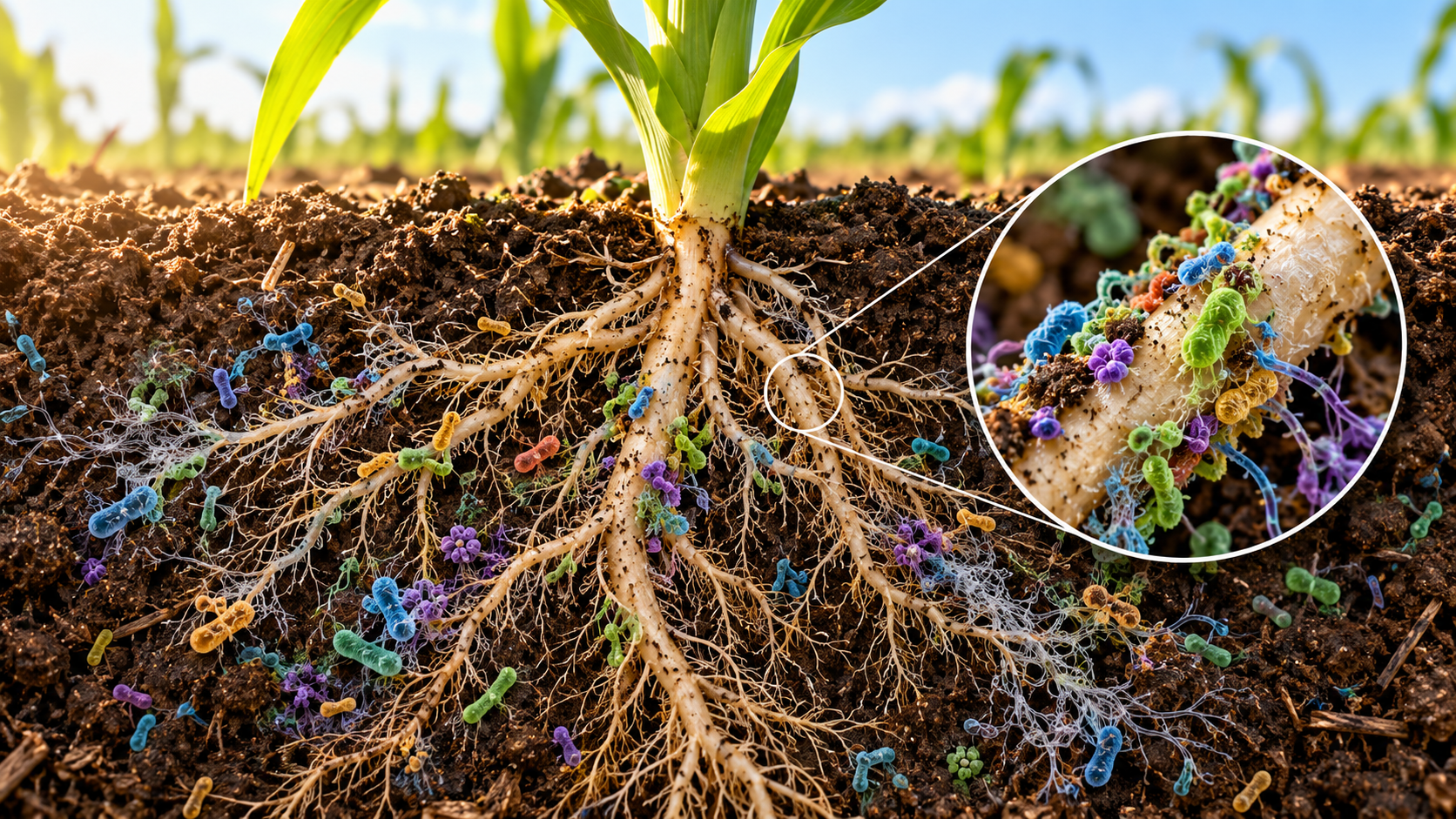
Why Microbial Inoculants Fail in the Field: Survival, Establishment, and the Rhizosphere
A microbial inoculant can contain a scientifically valid organism and still fail in the field. Learn why survival, application, root-zone placement, colonization, persistence, and native microbial competition all influence whether a biological product produces a measurable crop response.
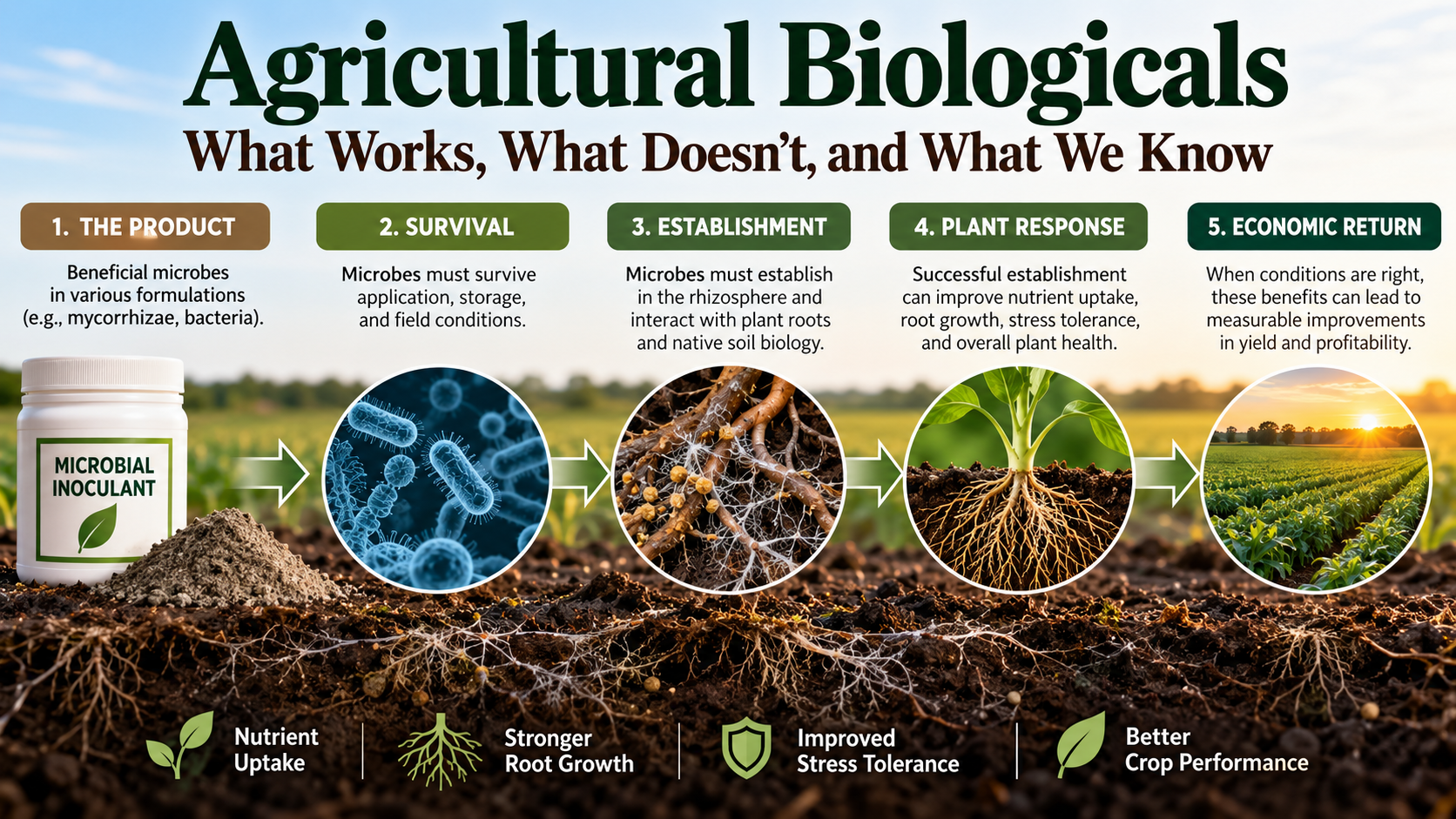
Agricultural Biologicals: What Works, What Doesn’t, and What We Know
Agricultural biologicals can improve nutrient uptake, root growth, stress tolerance, and crop performance—but field results are often inconsistent. Learn what the research shows, why microbial products vary, and how growers can evaluate whether a biological input is likely to provide a measurable return.
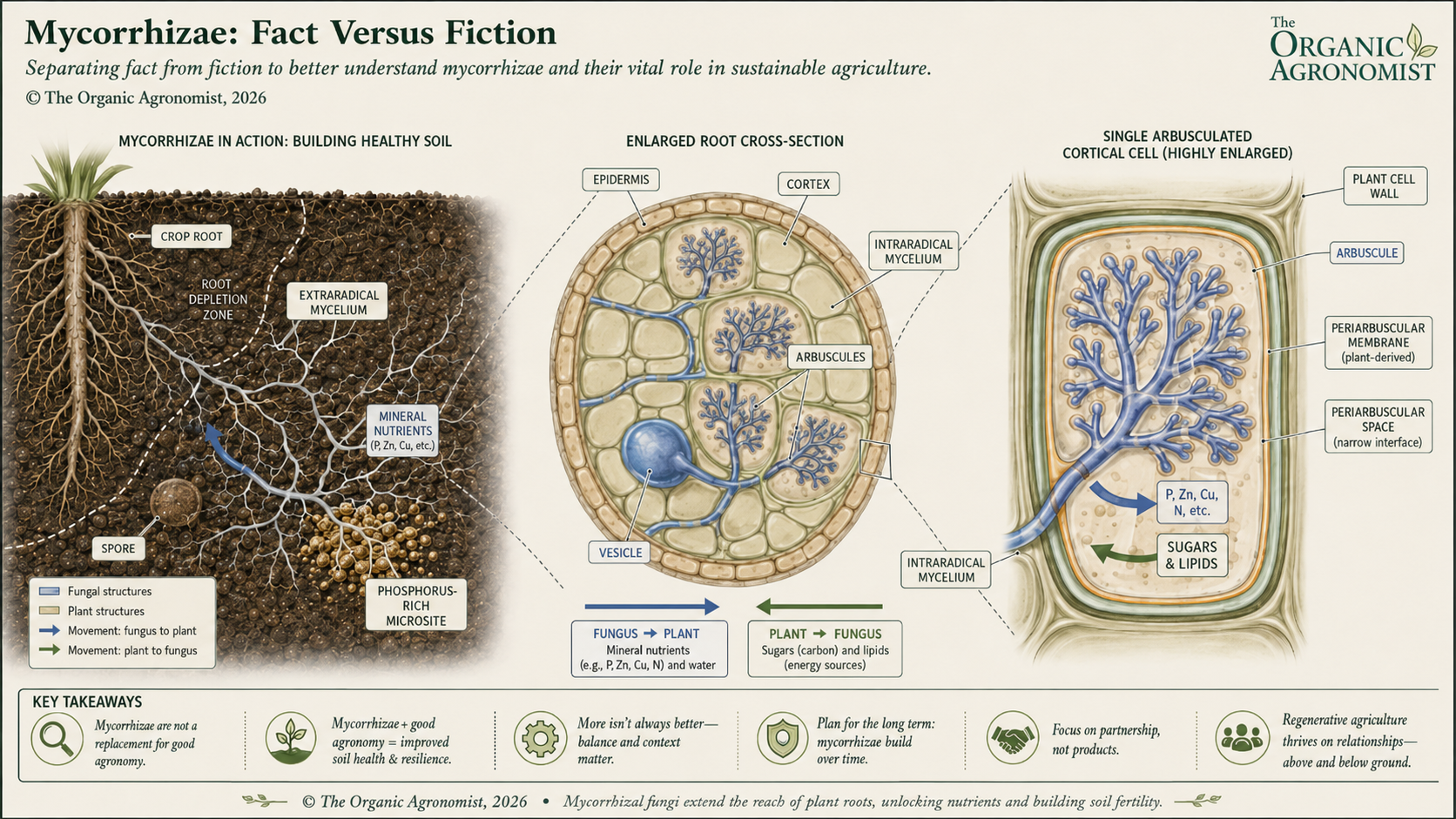
Mycorrhizae: Fact Versus Fiction
Mycorrhizal fungi can improve phosphorus acquisition, drought response, and crop performance—but not in every field. This evidence-based guide explains how mycorrhizae work, when inoculants may help, and when managing the native fungal community may be the better strategy.