Feed the fruiting window, week by week.
An organic program for raspberries and blackberries: a dormant Phyta-Grow® Leafy Green Special base, then weekly Phytamin® Pure through berry formation and harvest — steady, plant-available nitrogen exactly when the canes are carrying fruit.

Cane berries take up nitrogen steadily through fruiting.
Established raspberries and blackberries have a modest annual nitrogen demand — roughly 30–60 lb N/acre — but they draw it steadily across the fruiting cycle rather than in one push. UC and regional research supports split, in-season applications, and fertigation through bloom and harvest. Weekly Phytamin® Pure delivers immediately available nitrogen in small, consistent doses that match how the plant actually feeds, without loading the soil early.
A dormant base, then a weekly feed.
| Timing | Product | Rate | N supplied |
|---|---|---|---|
| Dormant or post-thinning | Phyta-Grow® Leafy Green Special 7-1-2 Dry, banded each side of row | 300 lb/acre | 21 lb N/acre |
| Weekly First berry formation through harvest | Phytamin® Pure 5-0-0 Through irrigation / fertigation | 2–3 gal/acre per week | ~0.8–1.2 lb N/acre per application |
Dry, banded each side of row
First berry formation through harvest
Through irrigation / fertigation
Placed across the season.
300 lb
The dormant Phyta-Grow® Leafy Green Special application builds a nitrogen base over winter. Weekly Phytamin® Pure begins at first berry formation and continues through the harvest cycle — small, steady, immediately available doses that track the plant’s demand while the canes are carrying fruit.
Cane berry nitrogen demand and timing: UC IPM berry fertilization guidelines; Oregon State University & Washington State University caneberry nutrient management (Hart, Strik, Rempel); NC State Southeast Regional Caneberry Production Guide (split and fertigated N through fruiting). Annual N accumulation: Strik & Bryla, raspberry and blackberry nutrient uptake and partitioning (~33–110 lb N/acre by type). Product rates and densities: Phytamin® Pure and Phyta-Grow® CDFA-registered labels, California Organic Fertilizers.
THE ORGANIC AGRONOMIST
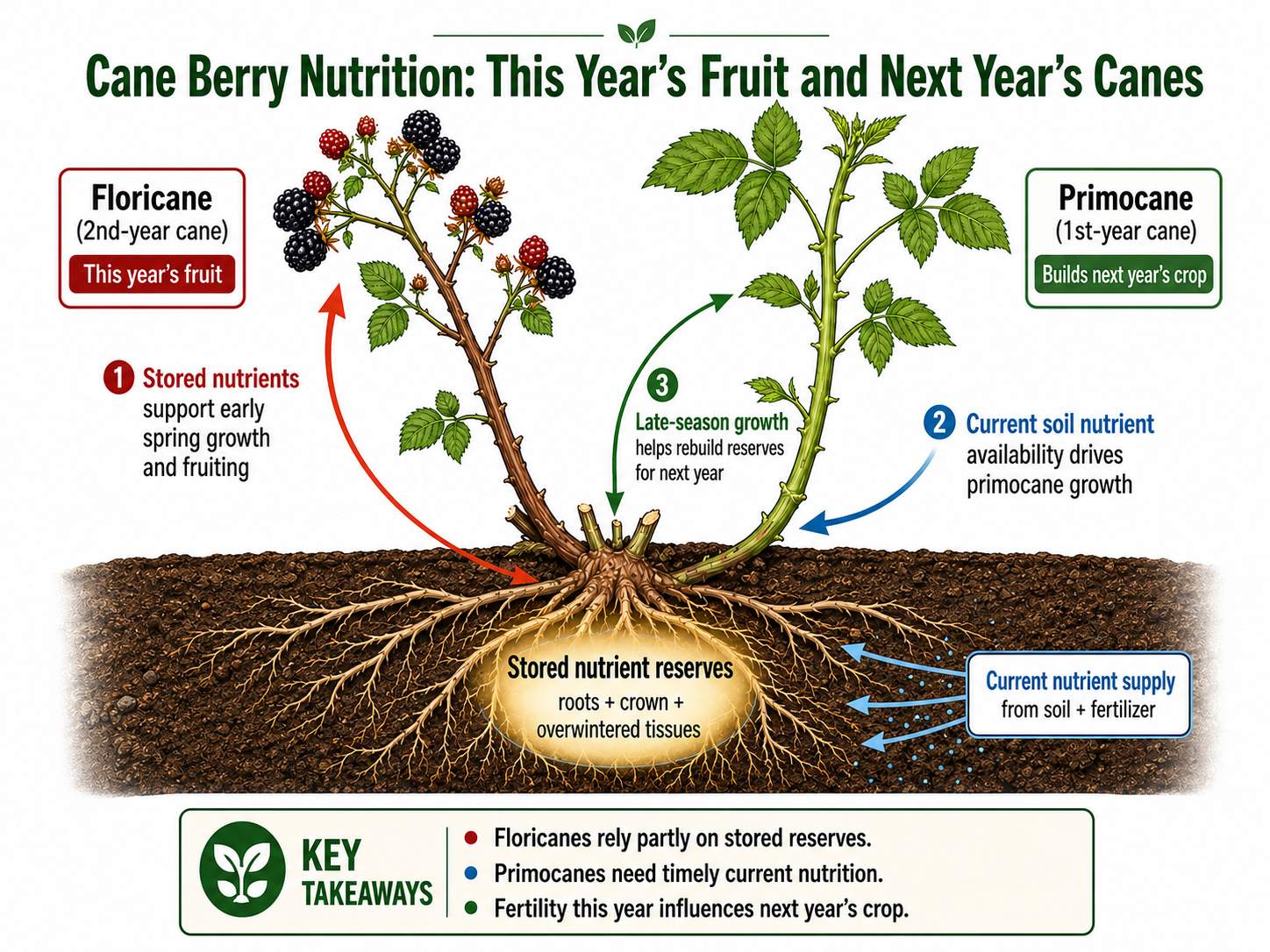
Growing Organic Cane Berries: Managing Nutrition for This Year's Fruit and Next Year's Canes
.Explore how nitrogen timing supports this year's raspberry and blackberry harvest while helping develop the canes that will produce next year's crop.